
Written by Brandi Hearn
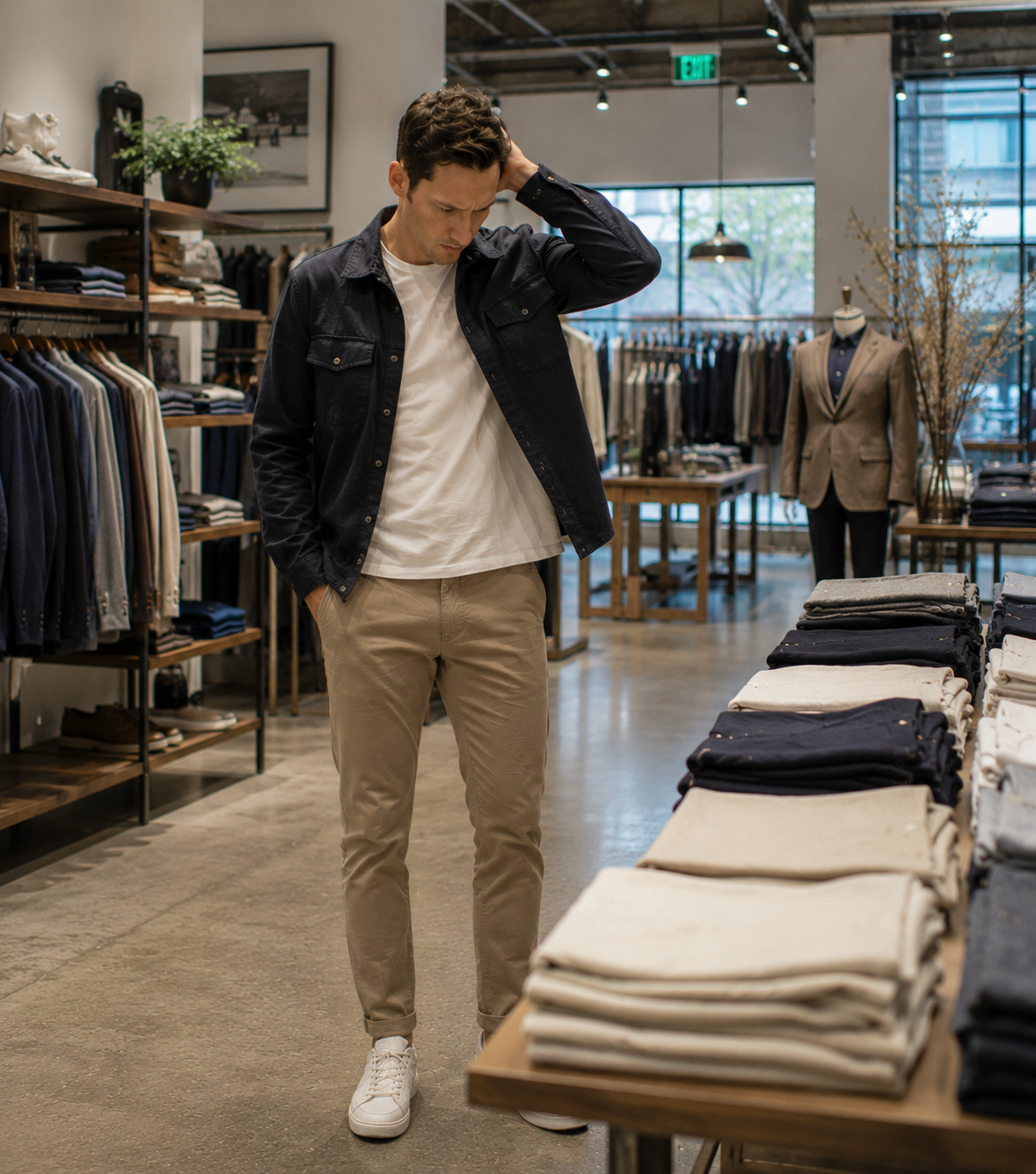
Even men who generally know how they want to look can have moments when an outfit doesn't feel quite right.
Does the shirt fit properly?
Do these colors work together?
Am I too dressed up for where I'm going—or not dressed enough?
When those questions come up every time you get dressed, the issue usually isn't that you don't have enough clothes.
You haven't established what consistently works for you.
Once you understand your proportions, your strongest colors, and what different situations require, getting dressed becomes much more intuitive.
1. Understand Your Proportions
Fit is always where I start.
Two men can wear the exact same shirt in the same size and have completely different results because their proportions are different.
If you carry more weight through your midsection, look for fabrics with enough structure to skim the body rather than cling to it. Piqué cotton, substantial knits, and well-cut shirts can create a cleaner line without adding unnecessary volume.
If you have a slimmer build, avoid compensating with oversized clothing. Look for pieces that follow your frame while still giving you enough room through the chest, shoulders, and thighs.
The objective isn't to hide or change your body.
It's to create proportion and balance with what you wear.
If you're unsure where your clothing should sit, my guide to how men's clothes should fit covers the details I look at when assessing a client's wardrobe.
2. Know Which Colors Work for You
Color can change how an outfit looks on you before you change a single piece.
The right shades can create definition, complement your natural coloring, and make your overall appearance feel more cohesive.
But I don't believe in rigid rules such as every man with a certain skin tone needing to wear—or avoid—the same colors.
Your undertone, hair, eyes, and natural level of contrast all matter.
Start by noticing which colors consistently make you look your best, particularly those worn closest to your face. Then establish a core palette around neutrals that work both with you and with one another.
That's the thinking behind building a wardrobe around the right neutrals.
Once your foundation is established, adding color becomes much easier because you already know what it needs to work with.
3. Dress for the Setting
One of the quickest ways to lose confidence in an outfit is to feel noticeably over- or underdressed.
Before getting dressed, consider where you're going, who you'll be around, and what the environment calls for.
Sometimes changing one piece is enough.
Add an unstructured blazer to trousers and a knit polo, and the outfit immediately feels more polished.
Replace the blazer with an overshirt or bomber, and the same foundation becomes more relaxed.
Swap loafers for minimal sneakers, and you've shifted the level of formality again.
A strong wardrobe gives you the ability to adjust without starting over.
That's why versatile pieces are so valuable. The right casual wardrobe pieces allow your wardrobe to move between work, evenings, and weekends without requiring completely separate closets for each.
4. Stop Reinventing Your Style Every Morning
Once you know something works, use that information.
If a particular trouser silhouette consistently looks good on you, build around it.
If navy, charcoal, olive, and cream make your wardrobe easy to coordinate, let those colors form part of your foundation.
If you know a certain combination works particularly well for client meetings, keep it in rotation.
Personal style isn't about constantly creating something new.
It's about understanding what works well enough that you can repeat the principles without repeating the exact outfit.
Over time, those decisions become your framework—and that's when getting dressed starts requiring considerably less thought.
The Bottom Line
Confidence in what you wear doesn't come from having every style rule memorized.
It comes from knowing yourself.
Your proportions. Your colors. Your lifestyle. The environments you're dressing for. And the pieces you can consistently rely on.
When those elements are established, you stop standing in front of your closet asking, “Does this work?”
You already know it does.
Build a Wardrobe You Can Trust
If you're ready to take the guesswork out of getting dressed, book a Private Consultation and start building a wardrobe around your proportions, lifestyle, career, and how you want to show up.

BRANDI HEARN
Strategic Wardrobe Advisor · Los Angeles
Brandi Hearn is a Strategic Wardrobe Advisor with more than a decade of experience helping accomplished men build intentional wardrobes around their careers, lifestyles, and how they want to show up.