
Written by Brandi Hearn
One of the questions I hear often from clients is:
“What shoes should I wear with these pants?”
It seems like a small decision, but footwear can change the entire direction of an outfit.
The same pair of trousers can feel polished with loafers, relaxed with minimal sneakers, or more substantial with boots. Choose the wrong shoe, and even good clothing can feel slightly disconnected.
The key is understanding formality, proportion, and the weight of what you're wearing.
Once you understand those three things, choosing the right shoes becomes much easier.
1. Shorts
Shorts are inherently casual, so your footwear should generally reflect that.
For most men, a clean pair of minimal low-top sneakers is one of the easiest options. They work particularly well with tailored chino shorts, polos, T-shirts, and lightweight button-downs.
If you want something more refined, consider:
Suede penny loafers
Driving loafers
Minimal leather sneakers
Clean, understated casual shoes
Loafers can be especially useful when you're going somewhere that calls for more than sneakers but doesn't warrant trousers.
Be more cautious with bulky high-tops, heavy boots, and traditional dress shoes. The visual weight can overwhelm shorts and make the proportions feel unbalanced.
With shorts, keep the footwear light, clean, and appropriate for the relaxed nature of the outfit.
2. Chinos
Chinos are one of the most versatile trousers a man can own because the right pair can move easily between professional, casual, and social settings.
Your shoes determine where the outfit lands.
For business casual:
Suede loafers
Leather penny loafers
Refined Derbies
Suede chukka boots
For a more casual look:
Minimal white or neutral sneakers
Suede driving loafers
Clean leather sneakers
A navy chino with a brown suede loafer feels very different from that same chino with a white sneaker—and both can work.
That's why I like versatile pieces. Instead of needing separate wardrobes for every part of your life, you can build a wardrobe that moves from office to weekend by changing a few supporting pieces.
The trousers stay the same. The shoes change the level of formality.
3. Jeans
Denim gives you plenty of flexibility, but the wash, cut, and overall outfit should guide the footwear.
Clean dark denim is particularly versatile because it can move from casual to smart-casual with very little effort.
For a relaxed look:
Minimal sneakers
Casual suede shoes
Refined athletic-inspired sneakers
For something more elevated:
Suede or leather loafers
Chelsea boots
Chukka boots
Casual Derbies
Dark indigo denim works especially well with brown and dark brown footwear, while black and charcoal denim pair naturally with black shoes and boots.
Pay attention to the shape of the jeans as well.
A very slim leg paired with an extremely heavy shoe can look unbalanced. Wider or more substantial denim can usually accommodate a shoe with more visual weight.
This is where fit and proportion become just as important as color.
4. Wool Trousers
Wool trousers naturally read more refined, but that doesn't mean they always require highly formal shoes.
The fabric itself should guide you.
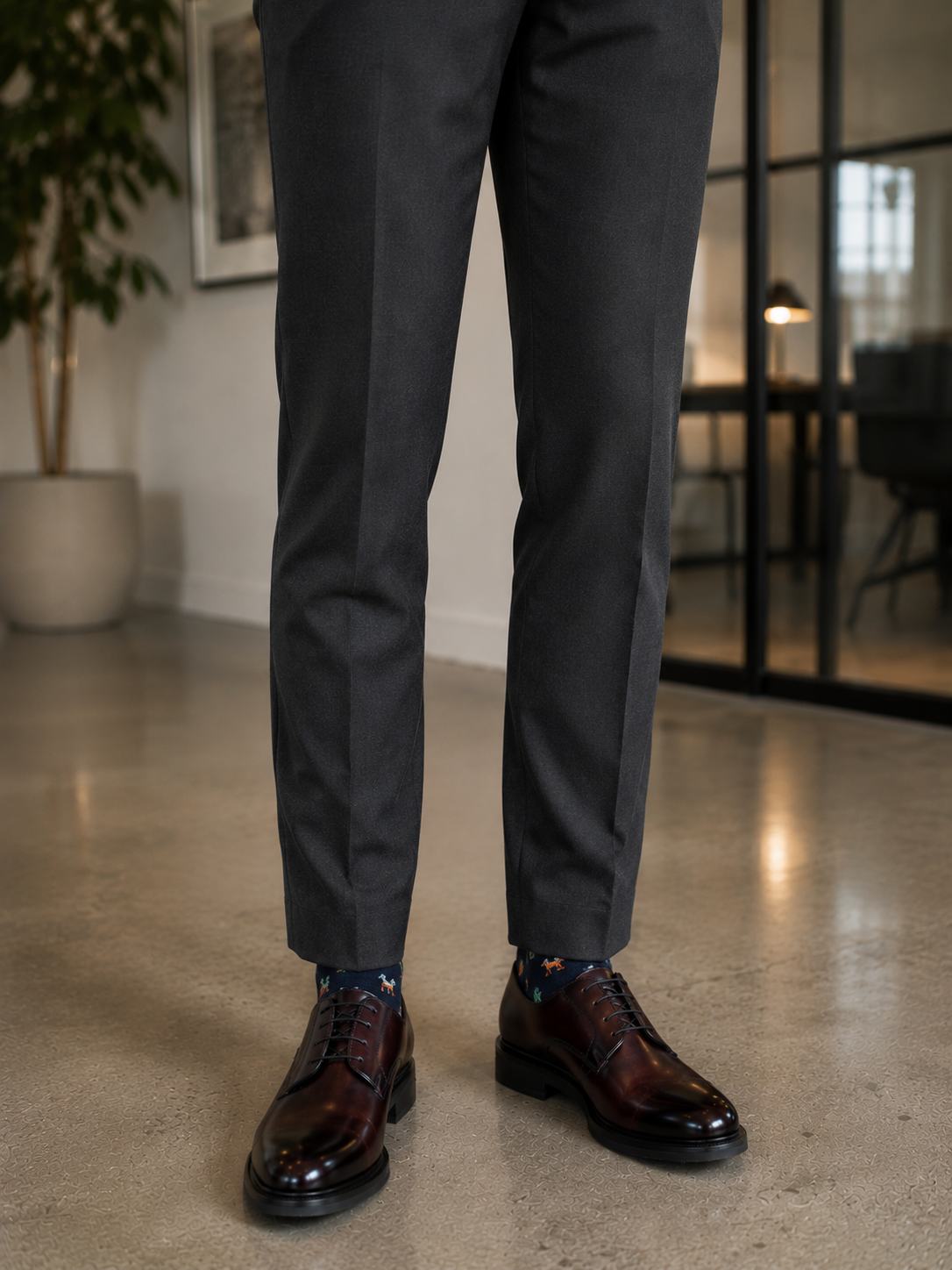
A fine wool trouser worn with a blazer may call for:
Oxfords
Derbies
Monk straps
Leather or suede loafers
A more relaxed wool trouser can also work with a clean leather sneaker, particularly when the rest of the outfit has been intentionally dressed down.
Heavier fabrics require more consideration.
Flannel trousers, for example, have more visual weight than lightweight tropical wool. A suede chukka or polished boot can balance that weight beautifully during cooler months.
The heavier the trouser, the more substantial the shoe can be.
5. Suits
When you're wearing a traditional suit, footwear should maintain the level of polish established by the tailoring.
Your strongest options include:
Oxfords
Derbies
Monk straps
Refined loafers
Black leather remains a natural choice with charcoal, grey, and black tailoring, while dark brown works particularly well with navy and many shades of grey.
For less formal tailoring, a loafer or other refined shoe can soften the look without making it feel careless.
Whatever you choose, condition matters.
A beautifully tailored suit paired with badly scuffed shoes immediately loses some of its impact.
Your shoes don't need to be the most noticeable part of the outfit. They need to finish it correctly.
The Rule I Use: Match the Weight and Formality
If you're unsure which shoes belong with your trousers, look at the outfit as a whole.
Ask yourself:
How formal are the trousers?
How substantial is the fabric?
How wide is the silhouette?
Where am I actually going?
Lightweight, relaxed clothing generally works best with lighter, more casual footwear. Structured tailoring and heavier fabrics can support shoes with more formality or visual weight.
And remember that shoes aren't an isolated decision. Your belt, trouser length, jacket, and other accessories all contribute to whether the outfit feels cohesive.
That's why the right shoes can change an entire outfit.
The Bottom Line
You don't need dozens of shoes to dress well.
You need the right range of shoes for the trousers you actually wear and the places you actually go.
A few carefully chosen pairs can take you from shorts and chinos to denim, tailored trousers, and suits while giving each outfit the appropriate level of polish.
That's the goal: not more options, but the right options—and knowing exactly when to wear them.

BRANDI HEARN
Strategic Wardrobe Advisor · Los Angeles
Brandi Hearn is a Strategic Wardrobe Advisor with more than a decade of experience helping accomplished men build intentional wardrobes around their careers, lifestyles, and how they want to show up.