
Written by Brandi Hearn
There isn't one universal list every man needs to follow.
Your profession, lifestyle, climate, proportions, and personal preferences should determine what belongs in your wardrobe.
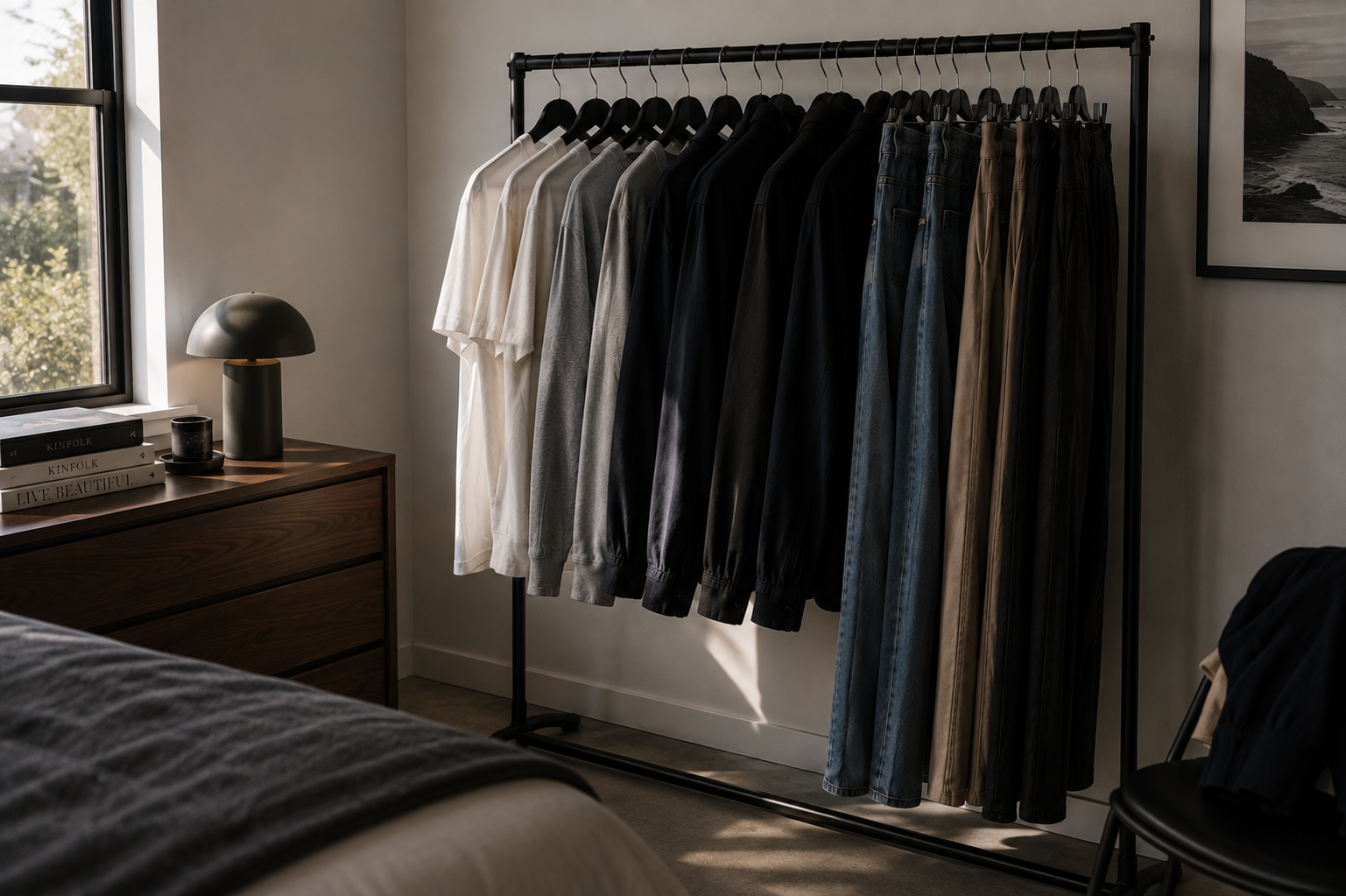
But if I were building the foundation of a versatile casual wardrobe for a professional man, these are the categories I'd consider first.
1. Dark Denim
A great pair of dark jeans can cover a large portion of your casual wardrobe.
They're polished enough for dinner, travel, or a casual meeting while still working for everyday wear. Look for a clean wash without excessive fading or distressing, and prioritize fit through the seat and thigh.
Wear them with a T-shirt and sneakers during the day, then a polo, knit, loafer, or casual jacket at night.
One good pair of jeans should give you far more than one good outfit.
2. Medium-Wash Denim
Once dark denim is covered, a medium wash gives you a more relaxed option for weekends and casual settings.
It works easily with T-shirts, polos, casual shirts, knitwear, and sneakers.
You don't need five different washes. Two excellent pairs that fit properly and serve different purposes can take you surprisingly far.
3. Casual Chinos
When denim feels too casual but dress trousers feel unnecessary, chinos fill the gap.
Navy, olive, stone, and khaki are versatile choices that connect easily with the rest of a casual wardrobe.
Choose a clean silhouette that suits your proportions rather than whatever fit happens to be trending.
4. Quality T-Shirts
T-shirts are some of the most frequently worn pieces in a man's wardrobe, so they shouldn't be an afterthought.
Look for quality fabric, a neckline that holds its shape, and a fit that complements your frame. White, navy, grey, black, and stone are all useful depending on your palette.
You don't need a drawer full. You need several excellent ones that make everything around them look better.
5. Polo Shirts
A good polo takes a casual outfit one step up without making it feel formal.
It works for lunches, dinners, travel, casual offices, and other smart-casual settings.
Pay attention to the collar, fabric, sleeves, and fit through the torso. The right polo gives you the ease of a T-shirt with a little more structure.
6. Casual Button-Down Shirts
A few shirts that sit between a T-shirt and a traditional dress shirt add useful range.
Oxford cloth, chambray, brushed cotton, and linen can all work depending on your climate and lifestyle.
Wear them with chinos or denim, open over a T-shirt, or under a casual jacket.
A useful casual shirt shouldn't require one specific outfit. It should create options.
7. Lightweight Knitwear
A crewneck, knit polo, half-zip, or lightweight sweater can make an outfit feel more polished without adding much complexity.
Choose colors that connect with the rest of your wardrobe so the same knit works with denim, chinos, trousers, and jackets.
8. An Overshirt
An overshirt fills the space between a shirt and a jacket.
Layer one over a T-shirt with jeans and sneakers, and a simple outfit immediately feels more finished.
It's especially useful for travel and transitional weather when you want an extra layer without a structured jacket.
9. A Casual Jacket
Depending on your style, this might be a suede jacket, bomber, field jacket, trucker, or another understated silhouette.
It's often the piece that turns jeans, a T-shirt, and sneakers into a complete outfit.
The hardest-working jackets are usually the ones you can wear repeatedly without them feeling repetitive.
10. Clean, Minimal Sneakers
Clean sneakers work with denim, chinos, polos, button-downs, knitwear, and casual jackets, making them one of the most versatile shoes you can own.
They don't need to be expensive. They need to be clean, understated, and appropriate for the rest of your wardrobe.
And when they're worn beyond saving, replace them.
11. Casual Loafers
When sneakers feel too relaxed and dress shoes feel too formal, a casual loafer fills the gap.
Wear them with chinos, dark denim, linen trousers, and other elevated casual pieces for dinners, travel, and smart-casual settings.
12. A Quality Leather Belt
Small details can determine whether an outfit feels cohesive or disconnected.
Choose a simple, well-made belt that works naturally with the shoes and clothing you wear most often.
You shouldn't have to think much about it once you're dressed. That's the point.
The Real Secret: Everything Needs to Work Together
You can own every piece on this list and still not have a wardrobe that works well.
The individual pieces matter, but how they work together matters more.
This is where many wardrobes fall short. Pieces are bought individually without considering how they connect to everything else. Shopping with a plan helps you build around what you already own and fill the gaps intentionally.
A well-built wardrobe has consistency in color, fit, proportion, and formality, so your core pieces naturally work together. A shirt you can wear with multiple trousers, jeans, jackets, and shoes is far more valuable than one that only works in a single outfit.
The best purchases don't just add something new. They make the rest of your wardrobe more useful.
Reset Your Closet Before You Replace It
Before shopping, look at what you already own and ask:
Does it fit properly?
Do I actually wear it?
Does it work with the rest of my wardrobe?
Does it make sense for my life now?
A no doesn't always mean the piece needs to go. Tailoring may solve the problem, or the right supporting pieces may make it useful again. And sometimes you've simply outgrown what belongs in your current wardrobe.
The important part is understanding what you have before adding more.
The Goal Isn't Better Outfits. It's a Better Wardrobe.
A great casual wardrobe should make getting dressed easier, with enough variety for your life without unnecessary excess.
The goal isn't one great outfit. It's a wardrobe where good outfits come together naturally.
My Private Wardrobe Advisory takes a strategic approach to what you own, what's missing, and how everything works together.
Because it's not about owning more clothes. It's about having the right ones.

BRANDI HEARN
Strategic Wardrobe Advisor · Los Angeles
Brandi Hearn is a Strategic Wardrobe Advisor with more than a decade of experience helping accomplished men build intentional wardrobes around their careers, lifestyles, and how they want to show up.