
Your Wardrobe Is Part of Your Professional Brand
Written by Brandi Hearn
Your professional reputation is built on what you know, how you communicate, the decisions you make, and the way you lead.
But before any of that has a chance to come through, people see you.
Your wardrobe is part of that first impression.
It doesn't determine your competence, and the right suit won't make you better at your job. But in a meeting, presentation, client dinner, or room full of people who don't know you yet, how you present yourself contributes to the picture they're forming.
For men whose careers have evolved, that's where an outdated or disconnected wardrobe can become a problem.
You may have grown into a new role, taken on more responsibility, or become more visible professionally while still wearing clothing chosen for a very different point in your life.
At some point, your wardrobe needs to catch up.
Your Clothing Is Communicating Before You Are
You don't need to be the best-dressed man in the room.
You do want to look like you belong there.
That distinction matters.
When your clothing fits properly, feels appropriate for the environment, and looks considered without looking overdone, it supports your presence rather than competing with it.
When it doesn't, the effect can be subtle. A jacket pulls across the chest. Trousers are too long. Shoes are worn past the point they should have been replaced. The outfit is technically appropriate, but something about it feels dated or disconnected.
These details don't define you, but they do shape the overall impression.
That's why getting the fit right is always one of the first things I address with a client. You can spend considerably more on clothing, but if the proportions are wrong, the price tag won't save the outfit.
Your Wardrobe Should Reflect the Level You're Operating At Now
A wardrobe can become outdated without the clothing itself being outdated.
Sometimes you've simply outgrown the version of yourself it was built for.
Maybe the shirts and chinos you bought years ago worked perfectly when your role was more behind the scenes. Now you're leading meetings, speaking at conferences, entertaining clients, or representing your company more publicly.
Or maybe the opposite has happened. Your collection of traditional suits reflects an office environment you no longer work in, and what you really need is a more refined wardrobe for today's less formal professional settings.
Career progression doesn't automatically mean dressing more formally.
It means dressing more intentionally for the environments you're in now.
That's why I think about how a wardrobe should evolve with you. Your clothing should reflect your current responsibilities and lifestyle rather than keeping you visually tied to an earlier chapter of your career.
Professional Doesn't Have to Mean Predictable
Looking professional doesn't require a closet full of navy suits and white shirts.
In fact, one of the quickest ways to feel disconnected from your clothing is to build your wardrobe around what you think a successful man is supposed to wear rather than what actually works for you.
The strongest professional wardrobes feel personal.
Your profession matters. So does your coloring, your proportions, the climate you live in, how much you travel, whether you're client-facing, and what you naturally feel comfortable wearing.
One man may need beautifully tailored suits. Another may look completely appropriate in refined trousers, knitwear, and an unstructured jacket. A founder in Los Angeles shouldn't automatically have the same wardrobe as an attorney in New York.
The goal isn't to look like everyone else in the room. It's to look appropriate for the room while still looking like yourself.
A Strong Wardrobe Removes Uncertainty
One of the most valuable things a professional wardrobe can give you has very little to do with fashion.
It's certainty.
An important meeting gets added to your calendar and you already know what you're wearing.
You have dinner with a client after work and don't need to go home and completely change.
You're packing for a business trip and know which trousers, shirts, jackets, and shoes can be combined several different ways.
You aren't standing in front of your closet wondering whether something fits, whether the shoes work, or whether you're dressed appropriately.
That's what happens when your wardrobe has been built as a complete system.
The decisions have already been made.
And when your work requires you to make important decisions all day, what to wear shouldn't be one of the difficult ones.
The Problem Usually Isn't That You Need More Clothes
Many of the men I work with already own plenty of clothing.
What they don't necessarily have is a wardrobe that reflects the way they live now.
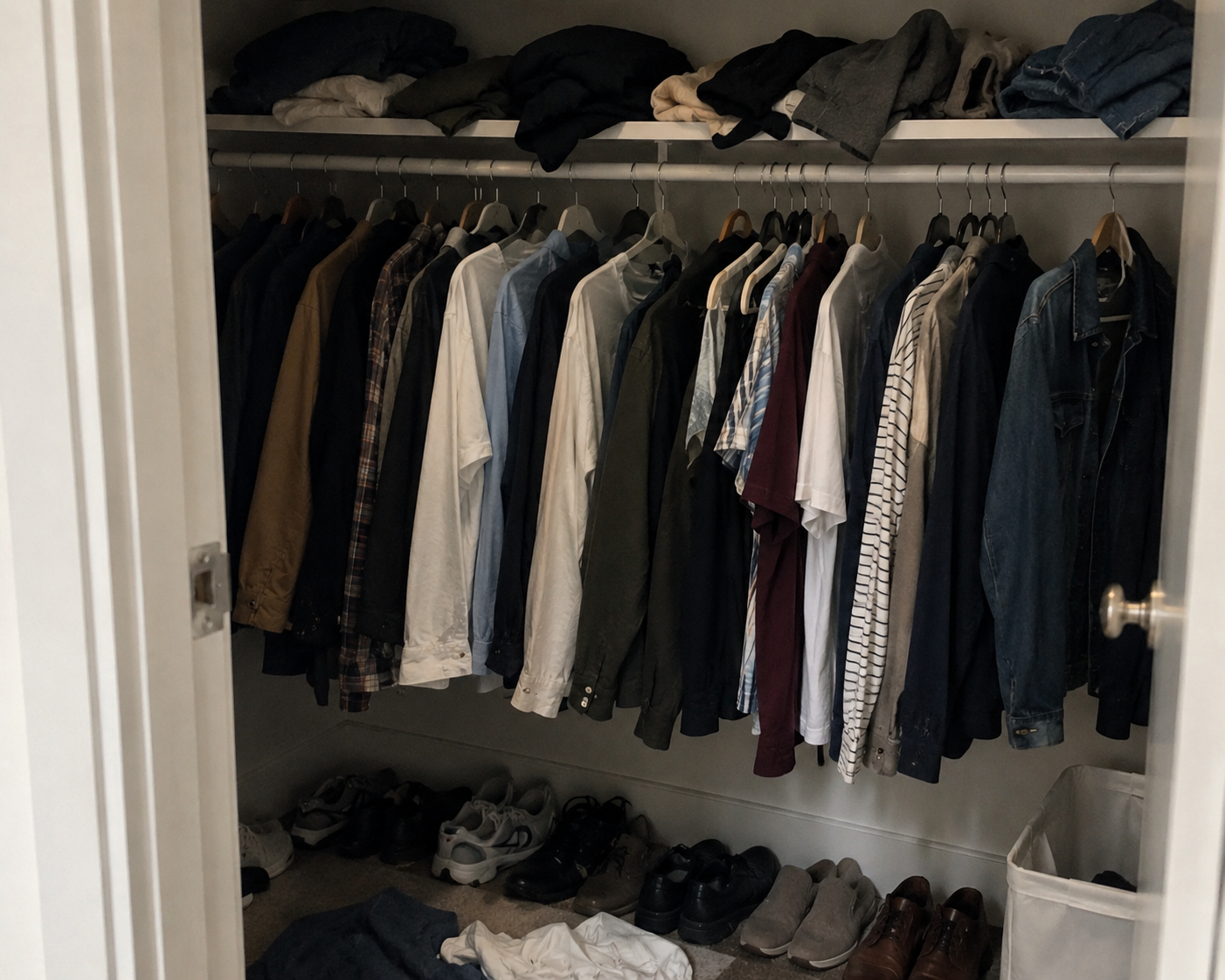
There are suits for occasions that rarely happen anymore. Shirts that haven't fit properly in years. Several versions of essentially the same pair of pants. Shoes that only work with one outfit. Casual clothing that feels noticeably less considered than everything worn to work.
And despite owning all of it, they still rely on the same few combinations.
That's not a shopping problem.
It's a wardrobe problem.
If you're regularly looking at a full closet and struggling to find something that feels right, you may have outgrown your current wardrobe.
The answer isn't automatically to replace everything. It's to determine what's still serving you, what needs to be refined, and what's genuinely missing.
Upgrade the Wardrobe Strategically
Before buying anything new, look at what you already have.
Which pieces fit exceptionally well?
Which ones do you consistently reach for?
What do those pieces have in common?
Then look at what's preventing the rest of the wardrobe from working as well.
Sometimes the solution is surprisingly small. Tailoring a few jackets may change how often you wear them. Better trousers can make several existing shirts useful again. Updating your shoes may immediately make the rest of your professional wardrobe feel more current.
Other times, the foundation itself needs more attention.
My guide to the 12 essentials of a well-built professional wardrobe is a useful starting point, but I don't believe every man should own an identical checklist of clothing.
Your wardrobe should be built around your life—not someone else's list of essentials.
Your Wardrobe Should Reinforce Who You Already Are
The point of dressing well professionally isn't to manufacture credibility through clothing.
If you've built the career, developed the expertise, and earned the responsibility, that work has already been done.
Your wardrobe should simply be consistent with it.
It should allow you to walk into a room without wondering whether you're underdressed, overdressed, outdated, or trying too hard. It should feel natural enough that you can forget about what you're wearing and focus on why you're there.
That's what I mean when I say your wardrobe is part of your professional brand.
It isn't there to create the man. It's there to accurately represent him.
For men who have reached a point where their wardrobe no longer reflects their career, lifestyle, or how they want to show up, my Private Wardrobe Advisory takes a strategic look at the entire picture—from what you already own and how it fits to what's missing and how the finished wardrobe needs to function.
The goal isn't to make you look like someone else.
It's to make sure the way you show up reflects the man who's already in the room.

BRANDI HEARN
Strategic Wardrobe Advisor · Los Angeles
Brandi Hearn is a Strategic Wardrobe Advisor with more than a decade of experience helping accomplished men build intentional wardrobes around their careers, lifestyles, and how they want to show up.