
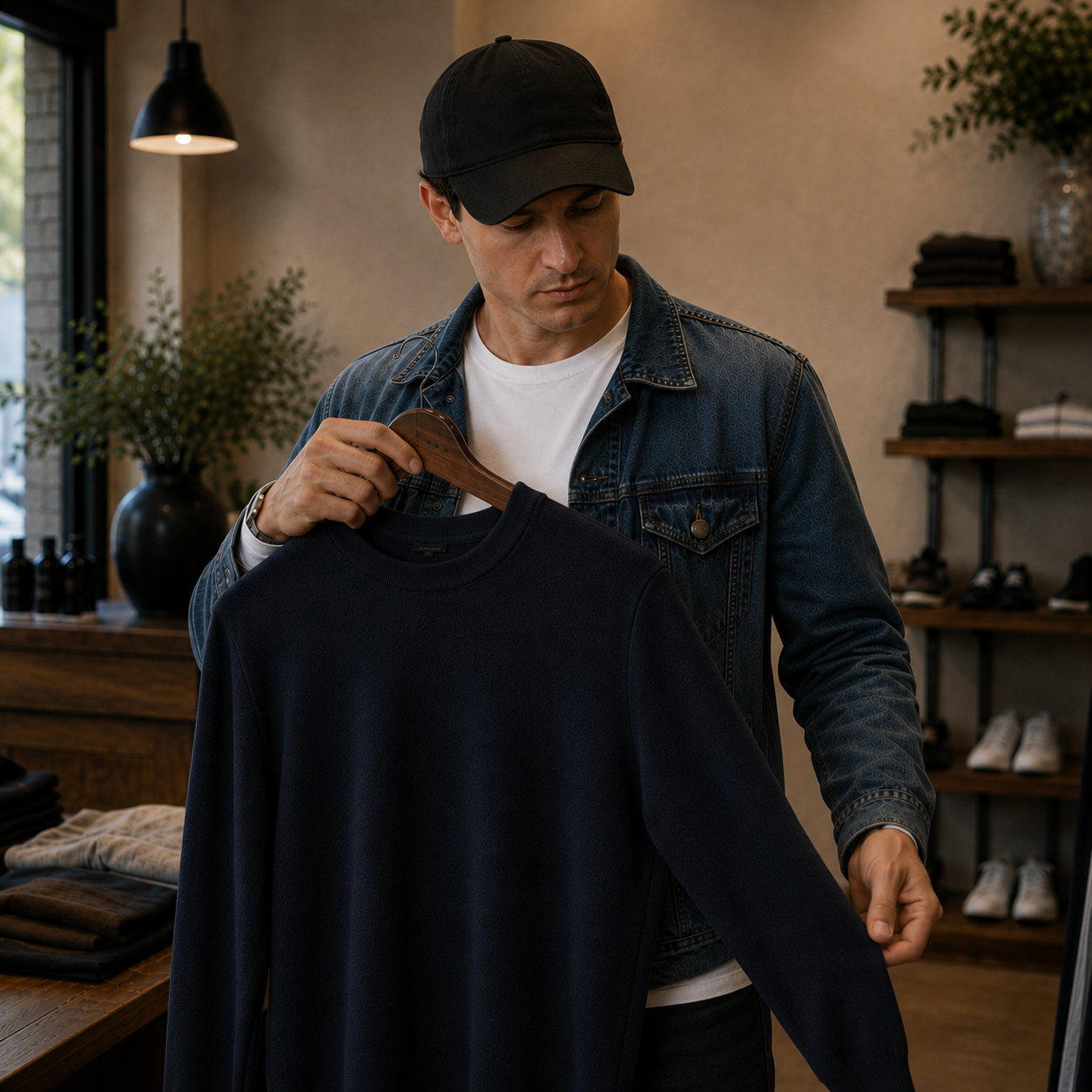
Shop Smarter. Build a Wardrobe That Works.
Written by Brandi Hearn
Let’s be honest—shopping for clothes can feel overwhelming.
Walk into a store or start scrolling online, and suddenly you have hundreds of options. That jacket looks great. Those sneakers are on sale. And that shirt feels like something you should own.
But a good purchase isn’t simply something you like.
It should have a purpose in your wardrobe.
If your closet is full but you’re still wearing the same few things—or constantly buying clothes that don’t work with what you already own—the answer probably isn’t more shopping.
It’s shopping with a better strategy.
Here’s where to start.
1. Start With a Wardrobe Strategy
Before buying a single piece, look at your lifestyle and identify the actual gaps in your wardrobe.
What are you regularly getting dressed for?
Professional meetings and workdays
Business travel
Dinners and social events
Weekends and everyday casual wear
Weddings or other special occasions
Then look at what you already own.
You may have plenty of shirts but not enough trousers to wear with them. Or several jackets but no versatile shoes that pull the outfits together.
This is the difference between buying individual pieces and building a wardrobe as a complete system.
Pro tip: Think beyond one outfit. A strong purchase should ideally work with several pieces you already own.
2. Prioritize Quality Over Quantity
Buying better doesn't always mean spending more.
It means paying attention to what you're actually getting for your money.
Look for:
Quality fabrics such as cotton, wool, linen, and leather
Strong, clean stitching
Buttons, zippers, and hardware that feel substantial
Fabric that holds its shape and drapes properly
Construction that makes sense for how often you'll wear the piece
And remember: quality means very little if the garment doesn't fit you properly.
A moderately priced jacket that fits exceptionally well can look considerably better than an expensive designer jacket that doesn't suit your proportions.
That's why understanding how men's clothes should fit should come before worrying about the name on the label.
3. Build Around Versatile, Lasting Pieces
Trends come and go. Your core wardrobe shouldn't need to.
Build the foundation around pieces that make sense for your lifestyle and can be worn in multiple ways.
That might include:
Well-fitting denim
Versatile trousers or chinos
Quality shirts and knitwear
A strong casual or professional jacket
Clean, versatile shoes
Your exact essentials will depend on how you live and work.
Color matters here too. Establishing the right neutral colors for your wardrobe makes it considerably easier for new purchases to work with what you already own.
Pro tip: Before buying something, picture at least three ways you could wear it using pieces already in your closet.
4. Shop With a Plan—Not a Mood
Impulse purchases are one of the quickest ways to end up with a closet full of clothes but very few outfits.
Before you buy something, ask:
Does this fill an actual wardrobe gap?
Does it fit properly?
Will I realistically wear it?
Can I style it multiple ways?
Does it work with what I already own?
Do I already have something that serves the same purpose?
And don't let a sale make the decision for you.
Something isn't a good purchase simply because it's 50% off.
If you wouldn't want it at full price, think carefully about why you want it now.
5. Think Long-Term
Shopping smarter also means taking care of what you already own.
Good clothing will last considerably longer when it's maintained properly.
Follow care instructions
Store clothing correctly
Rotate frequently worn pieces
Polish shoes and condition leather
Repair or tailor pieces when appropriate
Sometimes the smartest wardrobe investment isn't buying something new at all.
It might be tailoring a jacket, hemming trousers, repairing a good pair of shoes, or simply taking better care of the pieces you already have.
6. Know When It's Worth Investing
There are certain pieces where spending more can make sense—particularly when you'll wear them frequently and they'll work across a large portion of your wardrobe.
That might mean investing in:
A great coat or jacket
A well-tailored suit
Quality leather shoes
Well-fitting trousers
Excellent everyday denim
But price alone doesn't make something an investment.
A true investment piece is something you'll actually wear.
A $1,000 jacket that sits in your closet isn't more valuable than a $300 jacket you wear every week.
If you find yourself owning plenty of good clothing but very little of it still feels relevant, it may also be a sign you've outgrown your current wardrobe.
Final Thought
Shopping smarter isn't about restricting yourself or never buying something simply because you like it.
It's about being more intentional about what earns a place in your wardrobe.
Before you buy, know what you need. Prioritize fit. Choose quality where it matters. Think about how the piece works with what you already own.
Because the best purchase isn't necessarily the most expensive or exciting piece. It's the one that makes the rest of your wardrobe work better.
For men who want the strategy, shopping, sourcing, fit, and coordination handled for them, my Private Wardrobe Advisory takes this same approach across the entire wardrobe.
Buy with purpose. Build with intention. And make every addition earn its place.

BRANDI HEARN
Strategic Wardrobe Advisor · Los Angeles
Brandi Hearn is a Strategic Wardrobe Advisor with more than a decade of experience helping accomplished men build intentional wardrobes around their careers, lifestyles, and how they want to show up.