
Upgrade Your Presence: Avoid These Belt & Shoe Mistakes
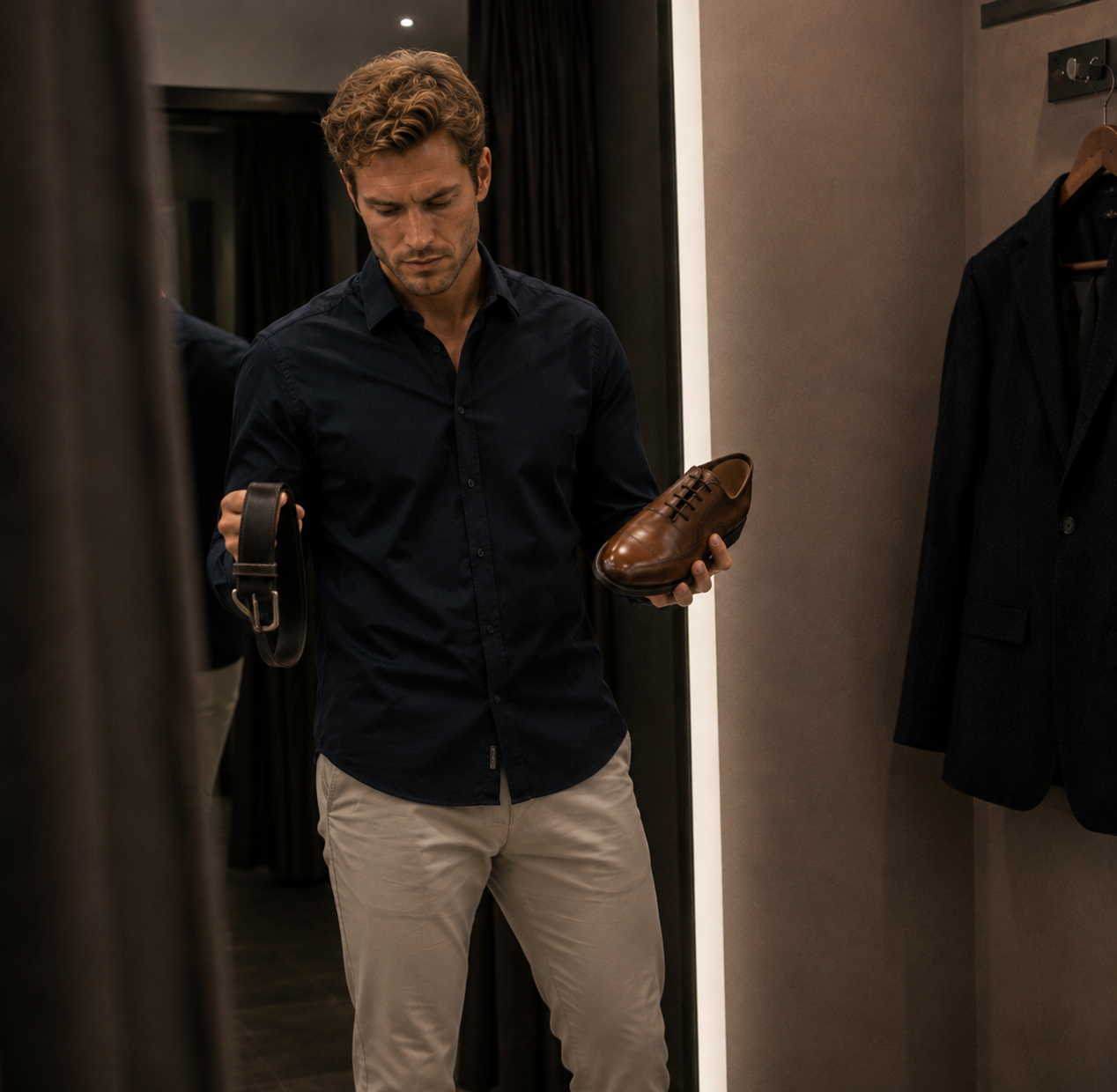
Belts and Shoes: Small Pieces, Big Authority
Written by Brandi Hearn
Belts and shoes are easy to treat as an afterthought.
You find a belt that's close enough to the color of your shoes, put it on, and move on with your day. But these smaller details have more influence on an outfit than most men realize.
When they're slightly off, you may not be able to pinpoint exactly what's wrong, but the outfit doesn't feel completely finished. When the leather tones, level of formality, and overall condition make sense together, everything feels more considered.
The good news is you don't need a large collection of either. You just need a few good options that work with the rest of your wardrobe.
1. Your Belt and Shoes Should Relate to Each Other
Your belt and shoes don't need to be an exact color match, but they should feel like they belong together.
If you're wearing dark brown leather shoes, for example, your belt should generally be in a similar dark brown family rather than a noticeably lighter tan.
A simple place to start:
Dark brown shoes → dark brown belt
Black shoes → black belt
Lighter brown shoes → similar or complementary brown belt
This becomes a little more flexible with casual outfits. Suede, woven belts, and more relaxed leather finishes don't require the same degree of coordination as traditional dress shoes and belts.
The goal isn't perfect matching. It's visual consistency.
That same principle applies throughout a well-built wardrobe system: the individual pieces should relate to one another without looking overly calculated.
2. Match the Belt to the Formality of the Outfit
Color isn't the only thing that matters. The style of the belt should also make sense with what you're wearing.
A traditional dress belt is generally slimmer, smoother, and more understated. It works naturally with suits and tailored trousers because it complements the cleaner lines of the clothing.
Casual belts can have a little more character. They may be wider or made from suede, textured leather, or woven materials, which makes them better suited to denim, chinos, and other relaxed pieces.
If you're wearing tailored clothing, you generally want the belt to disappear into the outfit rather than become a focal point.
With casual clothing, you have more room to introduce texture.
It's a small distinction, but it's one of those details that can make an outfit feel more polished without making it feel overly styled.
3. Keep the Hardware Understated
For most men, a simple buckle will be the most versatile choice.
Oversized buckles, prominent logos, and highly polished hardware can quickly become the first thing you notice, particularly when the rest of the outfit is understated.
That doesn't mean every accessory has to be completely minimal. Personal style still matters.
But if you're building a versatile wardrobe, a clean buckle in a simple finish will work across far more outfits and is less likely to date quickly.
Your accessories should finish the outfit, not compete with it.
4. One Belt Usually Isn't Enough
You don't need ten belts, but relying on one for everything can create problems.
The belt you wear with a charcoal suit and black leather shoes isn't necessarily the one you want with jeans and casual loafers on the weekend.
For most men, I would start with the options that correspond to the shoes they actually wear.
That might mean:
A simple black leather dress belt
A dark brown leather dress belt
A more relaxed leather or suede belt for casual outfits
From there, you can add lighter browns, woven styles, or other options if your wardrobe calls for them.
This is another reason I prefer to think about accessories as part of the larger wardrobe rather than as separate purchases. You don't need to own every possible option. You need the ones that support the clothing and shoes you already have.
5. Pay Attention to Condition
A beautiful pair of shoes won't do much for an outfit if the leather is heavily scuffed, and a cracked or worn belt can make otherwise polished clothing feel tired.
Belts don't require much maintenance, but they do need some attention.
Condition leather when necessary, avoid wearing the same belt every single day if you have alternatives, and replace pieces once the leather begins to crack or the hardware becomes noticeably worn.
The same applies to your shoes. Keep them clean, condition the leather, and have the soles or heels addressed before they're completely worn down.
These details aren't about perfection.
They're simply part of taking care of what you own.
Your Shoes Should Guide the Decision
If you're unsure which belt to wear, start with your shoes.
Your shoes often establish the level of formality for the rest of the outfit, which makes them a useful reference point.
Black leather oxfords with tailored trousers naturally call for something different than brown suede loafers with chinos. Clean sneakers may not require a traditional leather belt at all, depending on the outfit.
Instead of memorizing a long list of menswear rules, ask whether the pieces feel like they belong in the same outfit.
That's usually a much more useful way to think about it.
The Details Should Make the Outfit Feel Complete
Belts and shoes aren't the most exciting part of building a wardrobe, and they don't need to be.
Their job is to support everything else.
When the colors relate, the level of formality makes sense, and both pieces are in good condition, you probably won't think much about them once you're dressed.
That's exactly what you want.
A well-built wardrobe works because the details have already been considered. Your shoes work with your trousers. Your belts work with your shoes. Your colors coordinate, your clothing fits properly, and nothing feels like it was added as an afterthought.
For men who want those decisions considered across the entire wardrobe, my Private Wardrobe Advisory looks at everything from the core clothing and fit to shoes, belts, eyewear, and the finishing pieces that bring it all together.
Because sometimes it's the smallest details that make the wardrobe feel finished.

BRANDI HEARN
Strategic Wardrobe Advisor · Los Angeles
Brandi Hearn is a Strategic Wardrobe Advisor with more than a decade of experience helping accomplished men build intentional wardrobes around their careers, lifestyles, and how they want to show up.