
How to Build a Wardrobe Around Your Actual Calendar
Written by Brandi Hearn
A wardrobe can be full of great clothes and still feel like it doesn't quite work for your life.
Maybe you have more dress shirts than you need, several jackets you rarely reach for, and somehow still struggle to put together something for a business dinner or weekend away.
I see this often. The individual pieces may be perfectly good, but they don't always reflect how someone actually spends his time.
That's why one of the first things I want to understand is what a typical week looks like.
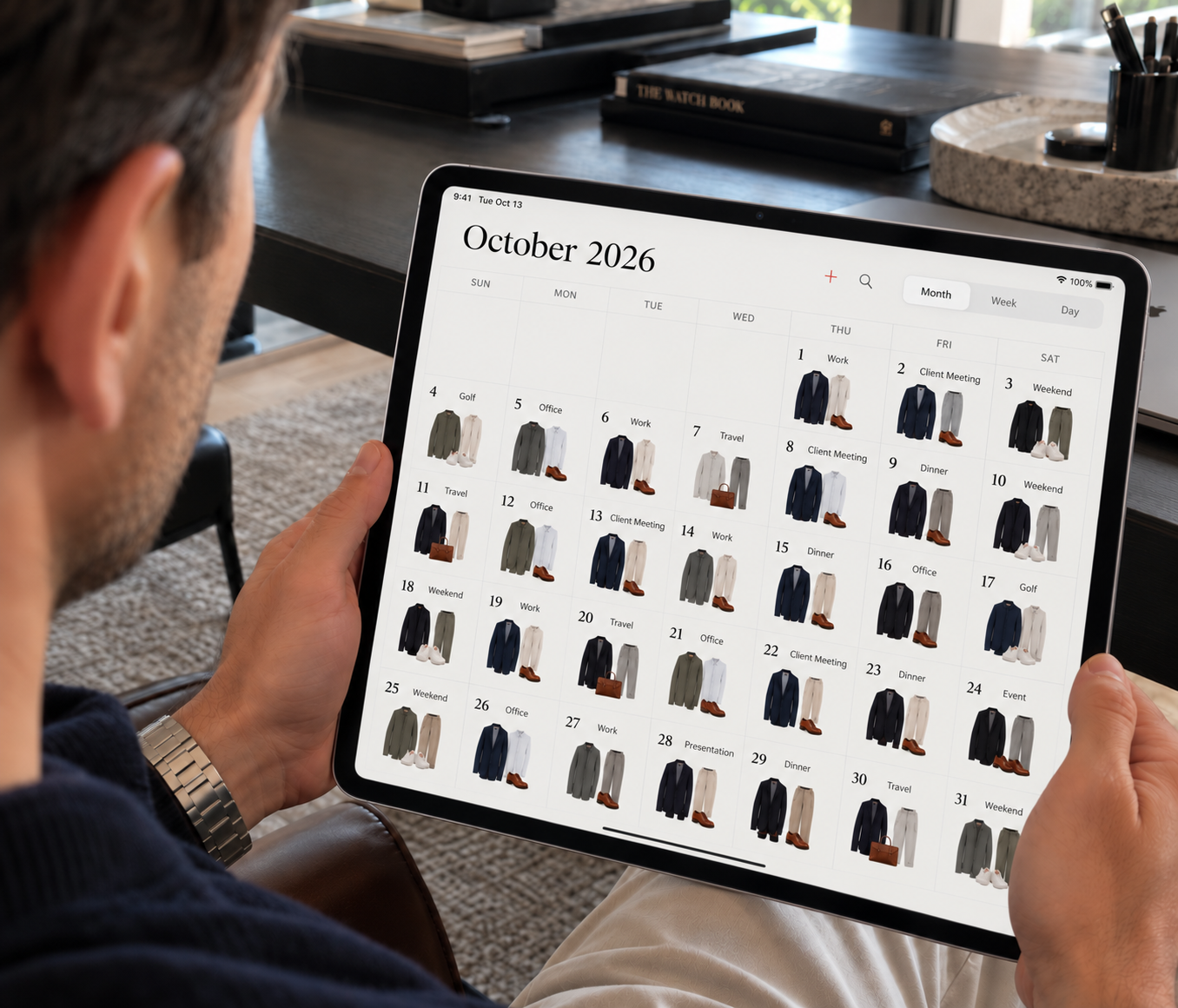
Your calendar tells me quite a bit about what your wardrobe needs to do.
Start With How You Actually Spend Your Week
Take a look at your schedule over the past month.
How many days were spent in the office? How often did you meet with clients? Travel? Go out for dinner? Attend an event?
And just as importantly, what did you wear during the time in between?
A man who spends most of his week in a relaxed office has different wardrobe needs from someone moving between formal meetings, airports, and client dinners.
Both may need a well-tailored jacket, but the number, fabric, and versatility of those jackets will likely look different.
The idea is to identify where your clothes are getting the most use.
Build Around the Situations That Come Up Most
Once you understand your routine, you can start giving the right parts of your wardrobe more attention.
If most days are business casual, that's where I'd concentrate first. Well-fitting trousers, refined knitwear, versatile shirts, and a few strong outer layers may carry much of your week.
If you regularly move from meetings to dinners, some of those pieces should work in both settings.
And if you're traveling frequently, fabric, comfort, packing, and how easily pieces combine become even more important.
A wardrobe works better when the pieces you rely on most are also the ones you've thought through most carefully.
Think in Complete Outfits
This is where I often find the biggest disconnect.
Someone might own several good jackets, plenty of trousers, and more shoes than he needs, yet very few combinations he feels confident wearing.
So rather than looking at each garment separately, I look at what it works with.
Which trousers go with that jacket? What shirt or knit belongs underneath? Which shoes finish the look? Is the outfit appropriate for where he's going?
A navy sport coat, for example, may work with tailored grey trousers for a meeting, dark denim for a casual dinner, or a refined knit for a more relaxed setting.
The value comes from having those combinations already figured out.
You can see how I approach this in The Wardrobe System, where individual pieces are considered as part of a complete wardrobe.
Pay Attention to What's Missing
After you've mapped out the outfits you actually need, wardrobe gaps become much easier to recognize.
Perhaps you have enough shirts but only one pair of trousers that fits properly.
Maybe you have excellent casual shoes but nothing appropriate for the dinners you attend regularly.
Or perhaps your wardrobe works beautifully for the office but doesn't give you much flexibility when you're traveling.
Those are useful things to know before you start buying.
Sometimes the solution is a new piece. Other times, it's tailoring something you already own or finding a better way to combine it.
If fit is part of the problem, The Definitive Guide to Men's Fit & Tailoring is a useful place to start.
Leave Room for the Unexpected
Your wardrobe should also have enough range for the occasions that don't happen every week.
A wedding invitation, an important presentation, a last-minute dinner, or a weekend trip shouldn't require rebuilding your wardrobe from scratch.
That doesn't mean keeping an excessive number of clothes for every possible scenario.
It means having a strong foundation that can adapt when your schedule changes.
Your Wardrobe Should Keep Up With Your Life
The goal is to open your closet and find clothes that make sense for where you're going, how you spend your time, and how you want to present yourself.
When the right pieces are in place, getting dressed becomes much more straightforward. You know what works together, what fits properly, and what to reach for.
A well-planned wardrobe should be ready for the life you're actually living.
If you'd like expert guidance building that kind of wardrobe, explore Private Wardrobe Advisory to see how I approach the process.

BRANDI HEARN
Strategic Wardrobe Advisor · Los Angeles
Brandi Hearn is a Strategic Wardrobe Advisor with more than a decade of experience helping accomplished men build intentional wardrobes around their careers, lifestyles, and how they want to show up.