
Why Your Clothes Don’t Feel Like You Anymore
Your Wardrobe Should Evolve With You
Written by Brandi Hearn
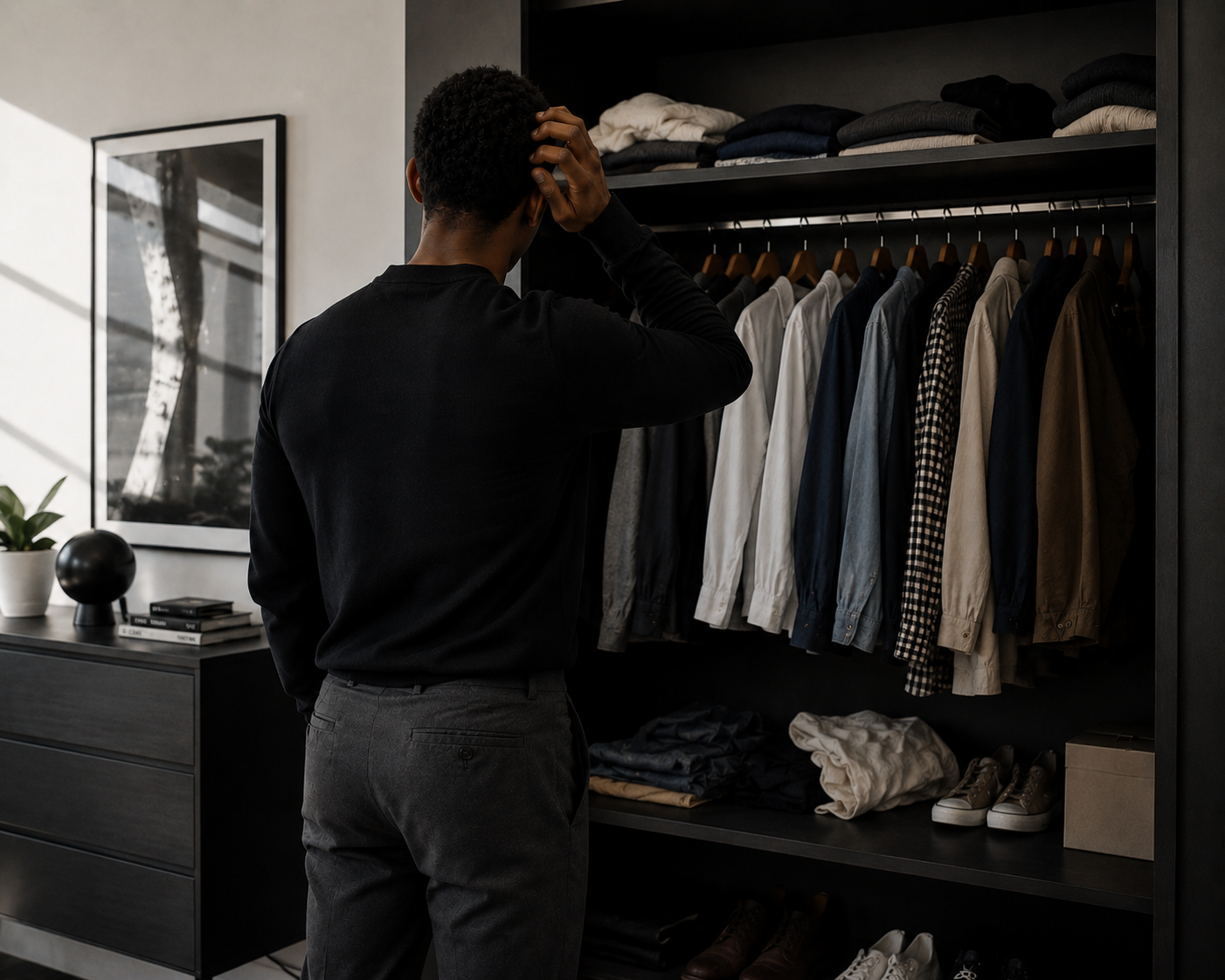
Have you ever put something on that used to feel completely right, but suddenly it just... doesn't?
It's the same shirt or jacket you've worn for years. It still fits, technically. There's nothing obviously wrong with it. But somehow, it feels like it belongs to an earlier version of you.
Usually, that's because your wardrobe stayed the same while your life moved forward.
Your career may have evolved. Your responsibilities might look different. Your body, lifestyle, or even your personal preferences may have changed. And the clothing that made sense five years ago may not make as much sense for the man you are today.
Your wardrobe should be able to evolve with you.
Why Your Wardrobe Can Start to Feel Off
Most wardrobes don't stop working overnight. It happens gradually.
Maybe you've moved from a technical role into leadership and now spend more time in meetings, presentations, or in front of clients. Or perhaps your workplace has become less formal, so you have plenty of suits but not enough polished options for everything in between.
Your life outside of work can change too. Maybe you're traveling more, going to more dinners and events, dating, or simply spending your weekends differently than you used to.
And then there's fit.
Bodies change. Something that technically still fits might be tighter through the chest or thigh, sit differently at the waist, or just not create the same proportions it once did.
That's why I look at how clothing fits based on the person wearing it now—not the size you've always bought or how something fit several years ago.
Your wardrobe should reflect your life today, not require you to keep dressing for an old one.
Signs Your Wardrobe Hasn't Kept Up
Sometimes it's obvious that your wardrobe needs attention. Other times, you notice it in the little things.
You keep reaching for the same few outfits even though your closet is full. You have plenty to wear to work, but when a dinner, date, trip, or more casual event comes up, you're suddenly not sure what to put on.
You might also notice that:
You rely on the same "safe" outfits over and over.
Certain parts of your lifestyle aren't really represented in your closet.
You're constantly wondering whether you're too casual or too dressed up.
You own plenty of clothing, but not much of it works together.
You're appropriately dressed but still don't feel as polished as you'd like.
None of that automatically means you need to start over.
It usually means it's time to take another look at what you have.
I've written more specifically about the signs you've outgrown your wardrobe, but the bigger question is simple: Does your wardrobe still work for the life you're actually living?
If it doesn't, that's where I'd start.
Start With Who You Are Now
Before you buy anything, think about what your week actually looks like now.
Where are you spending your time? How formal is your work environment? Are you regularly meeting with clients or giving presentations? What are you doing for dinners, dates, weekends, and travel?
Then think about how you want to feel when you're getting dressed for those things.
You don't need to create a completely new version of yourself through clothing. Your wardrobe should still feel like you—just more considered and better suited to where you are now.
That's also why I don't believe in building the same wardrobe for every man.
A founder who works primarily from home is going to have very different needs from a physician, attorney, or executive who spends most of his week in client-facing environments. And even two men with similar careers may need completely different wardrobes based on how they spend their time and what they naturally feel comfortable wearing.
The wardrobe has to make sense for the individual.
Take Stock Before You Replace Everything
Once you know what your life requires now, look at what you already own.
You don't need to assume everything older has to go.
You probably have pieces that still fit well and work perfectly for your current life. Others might just need tailoring or a different piece around them to become useful again.
And then there will be things that simply don't make sense anymore.
When you're unsure about something, ask:
Does it fit properly?
Is it still in good condition?
Do I actually wear it?
Does it work with other things I own?
Does it have a place in my life now?
Those questions tell you much more than simply asking whether you still like it.
The goal isn't to empty your closet. It's to figure out what's worth keeping and what you can actually build around.
Fill the Gaps Strategically
Once you know what's staying, it becomes much easier to see what's missing.
Maybe your professional wardrobe is covered when you need to wear a suit, but you don't have enough for business-casual meetings or dinners after work.
Or maybe you've spent years getting your work wardrobe right while your weekend options still consist of old T-shirts and the same pair of jeans.
You don't necessarily need to replace everything. Often, a few well-chosen pieces can change how useful the entire wardrobe feels.
A better pair of trousers might suddenly work with five shirts you already own. The right jacket can make several simple outfits feel more polished. Updated shoes can make both your professional and casual clothing feel more current.
This is where building your wardrobe as a complete system becomes much more useful than shopping for individual pieces.
Ideally, anything you add should solve a real need and make more of what you already own easier to wear.
Build for Where You Are—and Where You're Going
I do think your wardrobe should account for where you're headed, but that doesn't mean dressing for some imaginary future version of yourself.
Build for the man you are now and the life you're actively moving into.
If your responsibilities are expanding and you're spending more time in leadership settings, your wardrobe should be ready for that. If you're traveling more, you need versatile pieces that travel well. If your work environment has become more relaxed, you may need better options between a suit and a T-shirt.
The changes don't have to be dramatic.
Your wardrobe should simply feel prepared for what's actually happening in your life while still feeling recognizably like you.
Your Wardrobe Should Keep Up With Your Life
Your wardrobe isn't meant to stay exactly the same forever.
Your career changes. Your lifestyle changes. Your body changes. Your preferences change. Naturally, what you need from your clothing will change too.
That doesn't mean constantly shopping or reinventing your style.
Usually, it's much simpler than that: periodically look at what's working, refine what isn't, and fill the gaps as they come up.
When your wardrobe is aligned with your current life, getting dressed becomes easier. You have the right options for where you're going, your clothing works together, and you aren't trying to make old pieces serve a life they were never chosen for.
That's what a good wardrobe should do.
It should meet you where you are now and continue working as your life evolves.
For men who want that process handled strategically, my Private Wardrobe Advisory starts with your existing wardrobe, lifestyle, proportions, preferences, and the situations you're actually dressing for—and builds from there.

BRANDI HEARN
Strategic Wardrobe Advisor · Los Angeles
Brandi Hearn is a Strategic Wardrobe Advisor with more than a decade of experience helping accomplished men build intentional wardrobes around their careers, lifestyles, and how they want to show up.