
The Subtle Mistakes Keeping You From Looking Put Together
Written by Brandi Hearn
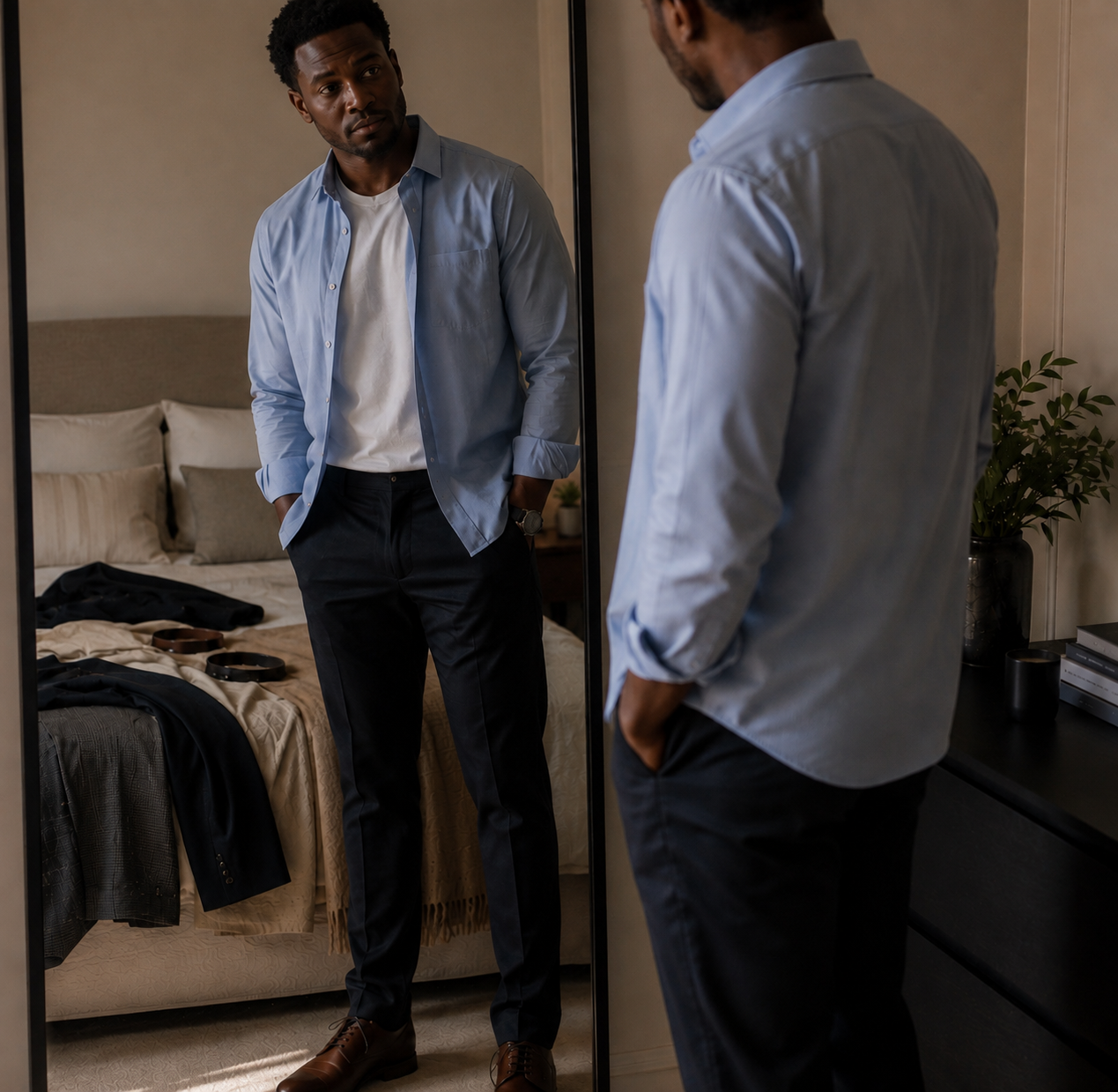
Sometimes you can put on an outfit that technically works and still feel like something is slightly off.
The shirt is good. The trousers make sense. Nothing is obviously wrong.
But somehow, the overall look doesn’t feel as polished as you expected.
Usually, the answer isn’t a better brand or more expensive clothing. It’s in the details.
Fit, proportion, pattern, and color all influence how an outfit comes together. When those elements work with you—and with one another—your clothing looks more natural, considered, and distinctly your own.
That’s also why I don’t believe great style comes from constantly following trends.
It comes from understanding what works for you and being consistent about it.
1. Start With Fit and Proportion
Fit is the foundation of almost everything I do with a client’s wardrobe.
You can buy an excellent jacket or a beautifully made shirt, but if it doesn’t sit properly on your body, the quality of the garment won’t matter nearly as much as you think.
Start with the areas that tend to have the greatest visual impact:
Shoulders: Jacket and shirt seams should sit where your natural shoulder ends.
Torso: Clothing should follow your frame without pulling or leaving excessive fabric through the body.
Trousers: You need enough room through the seat and thigh for the fabric to fall cleanly without clinging or looking unnecessarily loose.
Length: Jacket, shirt, sleeve, and trouser lengths should work with your proportions rather than simply following a standard measurement.
The goal isn’t to make everything as slim as possible.
It’s to create balance.
That’s why two men with similar measurements can look completely different in the same clothing. Good fit is about more than choosing the correct size on the label.
When the proportions are right, the entire outfit tends to look better—even when the individual pieces are relatively simple.
2. Use Pattern With Purpose
Pattern is an easy way to introduce personality, but it works best when you give it some room to breathe.
If you’re wearing a patterned shirt, you probably don’t need equally strong trousers and a patterned jacket competing with it.
A subtle stripe or check can work beautifully with a solid jacket. Texture can create visual interest without adding another pattern at all.
A few combinations I come back to regularly:
Patterned shirt with solid trousers
Subtle stripe or check with a neutral jacket
Textured knit with clean trousers or denim
Patterned accessory with an otherwise understated outfit
That doesn’t mean you can’t mix patterns. You absolutely can.
But you don’t need several competing elements to make an outfit interesting.
Often, one point of interest surrounded by quieter pieces creates a much more refined result.
3. Choose Colors That Work With You—and Each Other
Color is another area where relatively small changes can make a noticeable difference.
The colors closest to your face can affect how your complexion appears. At the same time, the colors throughout the rest of your wardrobe determine how easily your clothing works together.
That’s why I don’t give every client the same list of colors simply because they’re considered classic menswear.
Navy may be extremely useful for one man. Someone else may look better—or get considerably more use—from softer blue, charcoal, olive, brown, or another neutral.
Your coloring matters, but so do your level of contrast, lifestyle, profession, personal preferences, and what you already own.
The goal is to establish a neutral foundation that works for you, then create enough consistency around it that your shirts, trousers, jackets, knitwear, shoes, and accessories naturally coordinate.
Once that foundation is in place, introducing more color becomes much easier because every new shade doesn’t have to work independently.
4. Pay Attention to the Details That Finish an Outfit
Sometimes the clothing itself is right, but the finishing details are what make the outfit feel incomplete.
Shoes that are too casual for the trousers. A belt that feels disconnected from everything else. An overly bulky wallet. The wrong socks. Even eyewear that doesn’t complement your proportions.
Individually, these may seem minor.
Together, they can change the entire impression of an outfit.
None of these details needs to become a focal point. In fact, the best accessories often do the opposite.
They support the outfit quietly.
A good watch, the right belt, refined shoes, well-chosen eyewear, and a few other finishing pieces can make a relatively simple outfit feel complete without making it look overly styled.
5. Once You Know What Works, Build Around It
You don’t need to reinvent your style every time you get dressed.
Once you understand which fits, proportions, colors, and combinations consistently work for you, use that information to make the rest of your wardrobe stronger.
Maybe there’s a particular trouser silhouette that balances your proportions especially well. Perhaps certain shirt colors consistently look better on you. Or you may realize you feel most like yourself in a simple combination of tailored trousers, knitwear, and a jacket.
Those aren’t limitations.
They’re useful information.
Take what works and create enough variation around it that your wardrobe feels consistent without becoming repetitive.
That’s one of the principles behind building a wardrobe as a complete system.
Instead of treating every purchase and every outfit as a separate decision, you’re creating a framework you can continue building around.
The Details Matter Because They Work Together
Looking put together rarely comes down to one extraordinary piece of clothing.
More often, it’s the cumulative effect of several things being right at the same time.
The jacket fits properly through the shoulders. The trouser length works with the shoes. The colors complement one another. The accessories make sense for the outfit.
None of those details needs to announce itself.
Together, they simply make you look considered.
That’s ultimately what good personal style should feel like. Not trendy. Not overly styled. And not like you’re trying to become someone else.
Just a more refined version of yourself.
Once you understand what works for your proportions, coloring, lifestyle, and the environments you’re actually dressing for, you can stop experimenting with every new trend and start building a wardrobe around what actually works for you.
Because style isn’t about constantly changing what you wear.
It’s about knowing what works—and getting the details right.

BRANDI HEARN
Strategic Wardrobe Advisor · Los Angeles
Brandi Hearn is a Strategic Wardrobe Advisor with more than a decade of experience helping accomplished men build intentional wardrobes around their careers, lifestyles, and how they want to show up.