
You can get everything else right—the trousers, the shirt, the jacket—and still have the outfit feel slightly off.
Often, the shoes are the reason.
Shoes carry more visual weight than most men realize. They help determine how polished, relaxed, modern, or formal an outfit feels.
And because they sit at the bottom of your silhouette, they have the ability to either finish the look or disrupt everything above them.
The good news is that choosing the right pair doesn't need to be complicated.
Start With the Setting
Before thinking about color or style, consider where you're going.
A client meeting has different requirements from dinner on a Saturday night. Travel calls for something different from a formal event.
Your shoes should reflect that distinction.
Leather Oxfords or Derbies: Suits, formal occasions, and more traditional professional settings
Loafers: Business casual, dinners, and elevated everyday dressing
Suede shoes or boots: Smart-casual settings where you want more texture
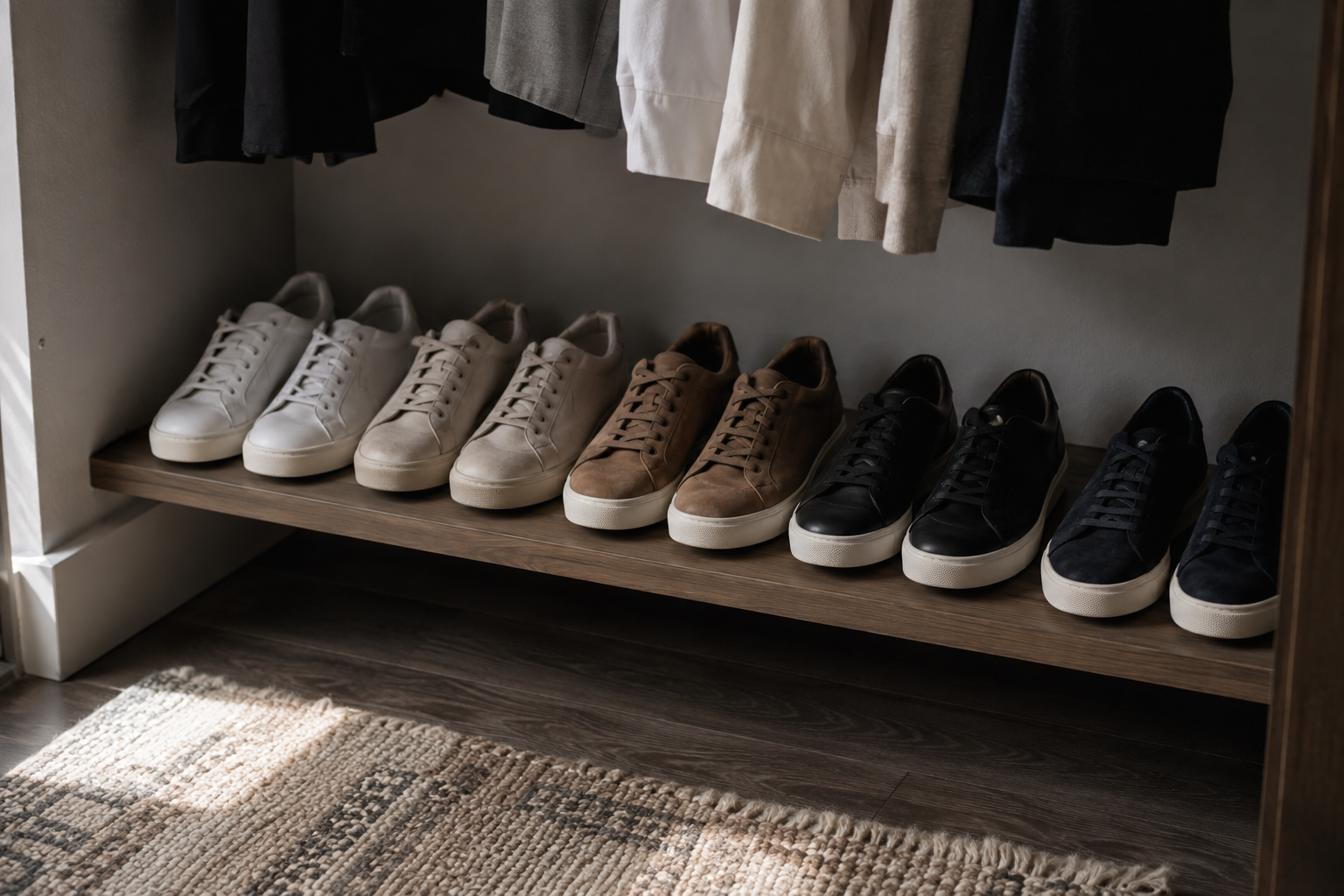
Minimal leather sneakers: Casual offices, travel, weekends, and relaxed social settings
You don't need a different pair for every occasion. You need enough range to move between the environments that are actually part of your life.
Let Your Shoes Set the Tone
One of the easiest ways to change an outfit is to change the shoes.
Take dark trousers, a knit polo, and a casual jacket.
Add leather loafers and the outfit immediately feels more refined.
Switch to clean leather sneakers and it becomes more relaxed.
The clothing hasn't changed. The energy of the outfit has.
This is why footwear plays such an important role in building a wardrobe that moves easily from work to weekend.
Pay Attention to Color
Your shoes don't need to match every other leather piece perfectly, but the overall combination should feel connected.
Black tends to work naturally with charcoal, grey, and more formal clothing.
Dark brown is particularly versatile with navy, grey, olive, denim, and earth tones.
Tan and lighter brown can work beautifully with lighter trousers and more relaxed outfits.
The same principle applies to your belt. The two don't have to be identical, but they should generally belong to the same color family.
Coordination should feel considered, not overly matched.
Material Changes the Look
Color isn't the only consideration. Material matters too.
Smooth leather tends to read cleaner and more formal.
Suede introduces softness and texture, making it especially useful with chinos, denim, knitwear, and less structured tailoring.
A minimal leather sneaker can make an outfit more relaxed without making it feel careless.
These small distinctions are what allow you to create more variety without dramatically expanding your wardrobe.
Proportion Matters
A shoe can be the right color and still feel wrong with an outfit.
Sometimes the issue is proportion.
A very heavy, chunky shoe can overwhelm narrow trousers. An overly sleek dress shoe may feel disconnected from relaxed denim or a casual jacket.
Look at the entire silhouette.
Your shoes should balance the clothing above them, not feel like they belong to a different outfit.
It's the same principle I discuss in my guide to how men's clothes should fit: individual pieces matter, but proportion is what makes the complete look feel right.
Condition Matters as Much as the Shoe
Even a beautiful pair of shoes loses its impact when it's noticeably worn.
Scuffed leather. Collapsed heels. Dirty soles. Cracked edges.
These details may seem minor, but they're often what separates an outfit that looks considered from one that looks unfinished.
Keep leather conditioned. Use shoe trees when appropriate. Clean sneakers regularly. Repair quality shoes before they're beyond saving.
You don't always need new shoes. Sometimes you need to take better care of the ones you already own.
You Don't Need a Closet Full of Shoes
More isn't necessarily better.
For most men, a carefully selected rotation of dress, smart-casual, and casual footwear will cover far more ground than a large collection of shoes that only work occasionally.
Think about your actual lifestyle first.
Then choose shoes that can work across multiple outfits and settings.
That's the same thinking behind building your wardrobe as a complete system: every piece should have a purpose, and the pieces you rely on most should make the rest of your wardrobe more useful.
The Bottom Line
Shoes may be the last thing you put on, but they shouldn't be an afterthought.
The right pair can make tailoring feel more modern, elevate denim, sharpen a casual outfit, or shift the same combination from work to dinner.
Choose for the setting. Pay attention to proportion. Coordinate your colors. Keep them in good condition.
When the shoes are right, you shouldn't notice them fighting for attention.
You should notice that the entire outfit works.
Next Step
Your shoes should work with your wardrobe, not become another decision to make.
The right footwear creates more versatility, connects your outfits, and makes getting dressed easier.
If you’re ready to build that kind of cohesion throughout your wardrobe, book a Private Consultation and start building a wardrobe where every piece has a purpose.

BRANDI HEARN
Strategic Wardrobe Advisor · Los Angeles
Brandi Hearn is a Strategic Wardrobe Advisor with more than a decade of experience helping accomplished men build intentional wardrobes around their careers, lifestyles, and how they want to show up.