
Written by Brandi Hearn
When most men decide it's time to improve their wardrobe, their first instinct is to shop.
A new blazer. Better shoes. A few shirts. Maybe some updated trousers.
But sometimes the fastest way to improve your wardrobe isn't adding something new.
It's removing what's bringing everything else down.
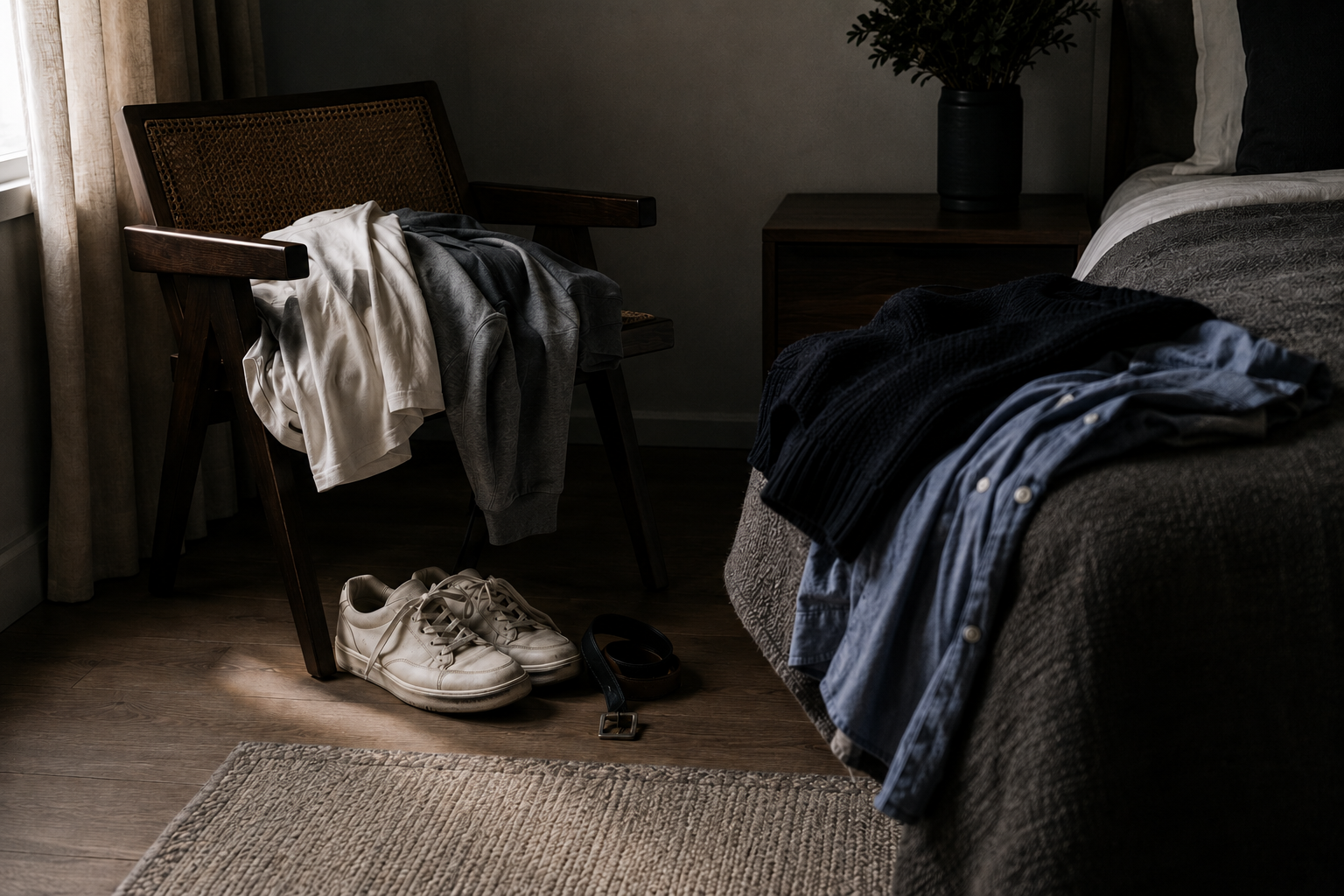
The faded polo you keep wearing because it's comfortable. The trousers that haven't fit properly in years. The jacket that technically still works but looks noticeably dated. The shoes that should have been replaced six months ago.
These pieces don't just take up space.
They make it harder to see what actually works, create more decisions every morning, and can make an otherwise good outfit look less polished.
Before you add more, take a look at what might need to go.
1. Stop Settling for "Good Enough"
Most wardrobes have a few pieces that aren't particularly good—but aren't quite bad enough to throw away.
So they stay.
And because they're there, they keep getting worn.
Maybe it's a polo that's slightly faded. A shirt that's never fit quite right. Chinos that have lost their shape. A sweater that's starting to pill.
Individually, none of these things seems significant.
But put one tired piece into an otherwise polished outfit and suddenly the entire look feels a little less considered.
Start identifying the clothing you're only keeping because it's good enough.
Ask yourself:
Would I buy this again today?
Does it fit properly?
Is it still in good condition?
Does it work with the wardrobe I'm building now?
Do I actually feel good wearing it?
If the answer is consistently no, it probably doesn't need to remain in your active wardrobe.
2. Replace the Staples You've Worn Into the Ground
The pieces you wear most often usually need attention first.
T-shirts. Dress shirts. Denim. Chinos. Everyday shoes. Belts.
Because they're familiar, it's surprisingly easy to stop noticing when they've reached the end of their useful life.
Look for:
Stretched collars and sleeves
Fading or discoloration
Dress shirts that have lost their shape
Denim that's excessively worn
Shoes that no longer clean up well
Cracked or fraying belts
Knitwear with significant pilling
Some pieces can be repaired or refreshed. Others simply need replacing.
Knowing how to care for your clothes properly can extend their lifespan considerably, but eventually even a well-maintained staple reaches the end.
Replace what you actually rely on before buying something new simply because it's more interesting.
3. Remove Clothing That Doesn't Fit Your Body Now
One of the biggest sources of wardrobe clutter is clothing kept for a different body.
The jacket that will work again if you lose ten pounds.
The trousers that technically button but are uncomfortable every time you sit down.
The oversized shirts you bought because you assumed more room meant a better fit.
If something doesn't fit your body now, decide whether it can realistically be altered.
Look for:
Jacket shoulders extending beyond your natural shoulders
Shirts pulling through the chest or stomach
Excess fabric through the body
Trousers pulling through the seat or thighs
Pants stacking excessively at the ankle
Sleeves that are noticeably too long or short
My guide to how men's clothes should fit can help you evaluate these areas more objectively.
Some fit problems are worth taking to a tailor.
Others aren't.
Don't let the amount you originally paid for something convince you that it still deserves space in your wardrobe.
4. Recognize When Something Is Simply Dated
There's a difference between classic and old.
A well-cut navy blazer can remain relevant for years.
But silhouettes change. Proportions change. The way men combine pieces changes.
You don't need to chase trends, but you also don't want your wardrobe frozen in the year you originally bought it.
Look at older:
Suits and jackets
Dress shirts
Trousers and denim
Shoes
Eyewear
Ties and accessories
Ask whether you'd genuinely choose that piece if you were shopping today.
Sometimes clothing still fits and remains in excellent condition, but it no longer reflects your current life or personal style.
That's often one of the clearest signs you've outgrown your wardrobe.
5. Don't Remove Everything at Once
There's another side to a wardrobe edit that I think is important.
You still need clothes to wear.
If most of your wardrobe needs updating, getting rid of everything immediately can leave you with a closet that's technically more refined but completely impractical.
Instead, separate what needs to go into two categories.
Remove now: Pieces that are damaged, severely dated, don't fit, or realistically won't be worn again.
Replace, then remove: Pieces that aren't ideal but are currently serving a necessary purpose until you find the right replacement.
Maybe your everyday chinos aren't flattering, but they're currently your only appropriate trousers for work.
Keep them temporarily.
Once the replacement arrives and fits properly, the old pair leaves.
This allows you to improve the wardrobe strategically without creating unnecessary gaps along the way.
6. Clear the Visual Clutter
A crowded closet doesn't automatically give you more options.
Sometimes it makes your options harder to find.
Your best jacket is buried behind six you never wear. The trousers that actually fit are mixed in with pairs that don't. You have fifteen shirts but consistently reach for the same four.
Eventually, the volume itself becomes part of the problem.
Organize what remains by category:
Shirts
Trousers
Denim
Jackets
Knitwear
Shoes
Accessories
Once the unnecessary pieces are gone, patterns become much easier to see.
You may discover that you don't need ten new things.
You need one pair of trousers that connects several jackets. Two better shirts. A replacement pair of shoes.
Editing creates clarity. And clarity makes the next purchase considerably smarter.
7. Identify the Gaps Before You Start Shopping Again
Removing clothing is only useful if you understand what the wardrobe needs afterward.
Once you've edited what you own, look at what's left.
What do you wear constantly?
What's missing?
Which situations are difficult to dress for?
Which pieces would make several things you already own more useful?
That's when you can start shopping strategically rather than replacing clutter with new clutter.
It's also how you begin building a wardrobe as a complete system, where each new addition has a clear role and works with what you already own.
Final Thought
A wardrobe upgrade doesn't always begin in a store.
Sometimes it begins with finally removing the things that aren't serving you anymore.
The poor fits.
The worn-out staples.
The outdated pieces.
The things you keep passing over but can't quite bring yourself to get rid of.
Once those are gone—or strategically replaced—you can actually see the wardrobe you're working with.
And from there, the question changes from:
What else should I buy?
to:
What does my wardrobe actually need?
For men who want that process managed strategically, my Private Wardrobe Advisory starts by assessing what's already in the wardrobe, determining what stays, what needs to be replaced, and what's genuinely missing before new pieces are sourced.
Sometimes the most effective wardrobe upgrade isn't adding another piece. It's creating enough clarity to recognize what deserves to be there.

BRANDI HEARN
Strategic Wardrobe Advisor · Los Angeles
Brandi Hearn is a Strategic Wardrobe Advisor with more than a decade of experience helping accomplished men build intentional wardrobes around their careers, lifestyles, and how they want to show up.