
The Only Two Watches a Man Really Needs
Written by Brandi Hearn
A watch is one of the few accessories a man can wear every day without giving it much thought.
But that doesn't mean it should be an afterthought.
The right watch adds another layer of polish to an outfit. It can make a suit feel complete, give a casual look more intention, and say something about your personal style without needing to be particularly noticeable.
And unless you're genuinely interested in collecting watches, you probably don't need nearly as many as you think.
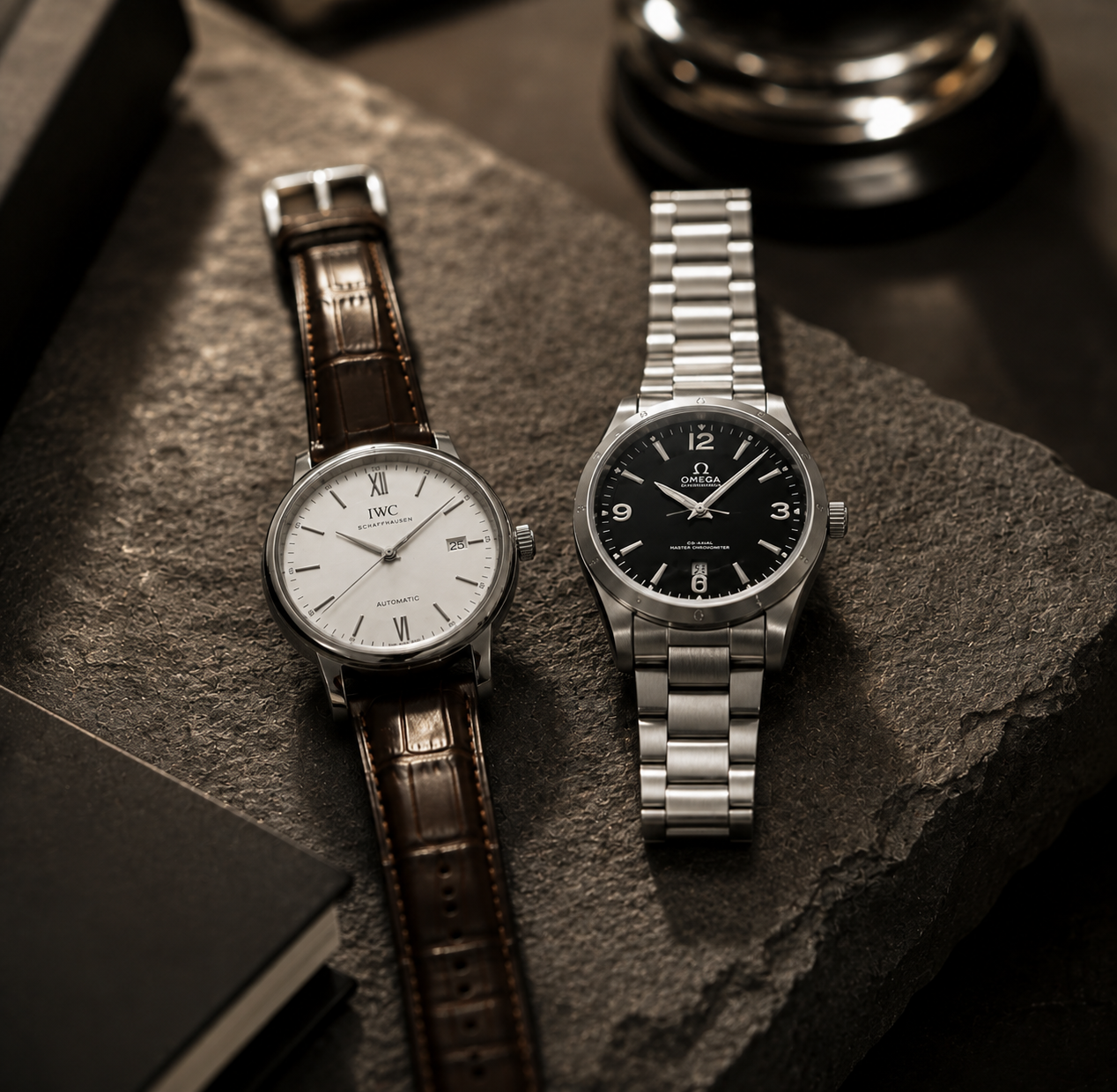
For most men, I like to start with two: a refined leather-strap watch and a versatile metal-bracelet watch.
Get those two right, and you can cover almost everything from business meetings and formal events to dinners, travel, and weekends.
1. The Leather-Strap Watch: Classic and Refined
A leather-strap watch is an easy choice when you want the overall look to feel polished.
Think suits, tailored trousers, client dinners, weddings, presentations, and more formal evenings.
The leather introduces a softer, more traditional finish that works particularly well with tailoring.
Why Leather Works
Leather naturally connects with other elements you're already wearing.
A brown leather strap can complement brown shoes and a brown belt. Black leather works naturally with black footwear and more formal wardrobes.
The shades don't need to match perfectly, but they should feel like they belong together.
It's the same principle that applies when building out a professional wardrobe: coordination matters more than an exact match.
Pay Attention to Proportion
The watch should suit your wrist rather than overwhelm it.
Case diameter is only one consideration. Case thickness, lug-to-lug length, dial size, and your wrist proportions all affect how large a watch actually appears.
Most importantly, a dressier watch should sit comfortably underneath your shirt cuff rather than constantly catching on it.
A good watch complements your proportions. It doesn't dominate them.
Leather-Strap Watches to Consider
Baume & Mercier – Clifton – Refined and understated, with enough presence to work particularly well with tailoring.
Hamilton – Jazzmaster – Clean and versatile enough to move between professional and evening settings.
Orient – Bambino – A more accessible option with classic dress-watch styling.
2. The Metal-Bracelet Watch: Versatile and Everyday
If the leather watch handles the dressier side of your wardrobe, a metal-bracelet watch gives you range everywhere else.
Wear it with:
Dark denim
Chinos
Polos
Knitwear
Casual jackets
Business-casual outfits
Travel looks
Metal has a slightly sportier, more contemporary character, but a clean design can still look very refined.
And unlike a leather strap, you don't have to think about coordinating it with the color of your shoes and belt.
Why Metal Works
It's durable, versatile, and easy to incorporate into an everyday wardrobe.
A simple stainless-steel bracelet also works naturally with other understated accessories, particularly when you're already paying attention to the smaller details that finish an outfit.
If you wear other jewelry, consider the relationship between the finishes. They don't always have to match perfectly, but they should look considered together.
Get the Bracelet Fitted
A great watch with a poorly fitted bracelet immediately loses some of its polish.
It shouldn't slide halfway down your hand, but it shouldn't feel restrictive either.
Have links removed or added until the watch sits securely and comfortably on your wrist.
Fit matters with accessories for the same reason it matters with clothing: proportion changes the entire impression.
Metal-Bracelet Watches to Consider
Omega Speedmaster – An iconic sport watch that can move easily between casual and more refined wardrobes.
Longines – Conquest – Polished enough for professional settings while remaining practical for everyday wear.
Tissot – PR 100 – Clean, understated, and an easy entry point for an everyday watch.
Can You Wear a Metal Watch With a Suit?
Yes.
There's an old-school idea that a dress watch must have a leather strap, but modern menswear isn't quite that rigid.
A slim, understated metal-bracelet watch can work perfectly well with a suit, particularly in contemporary business environments.
The distinction I find more useful is formal versus casual design, not simply leather versus metal.
A large, bulky sports watch may fight with a refined suit. A streamlined steel watch with a clean dial may look completely appropriate.
The watch should make sense with the rest of the outfit.
That's the same approach I take throughout a well-built wardrobe: rules are useful, but proportion, context, and cohesion matter more.
Why Two Watches Are Enough for Most Men
You can absolutely own more.
If watches are something you genuinely enjoy, collect them.
But from a wardrobe standpoint, you don't need six watches to dress well.
A carefully chosen leather option gives you something refined.
A versatile metal option gives you something more relaxed and everyday.
Between the two, you can comfortably move through most professional, social, and casual situations.
And that's ultimately what I want from any accessory I recommend to a client.
It should give you more options without giving you more decisions.
Final Thought
A watch shouldn't have to announce itself to make an impact.
It should be proportional to you, appropriate for the setting, and consistent with the rest of what you're wearing.
That's also why I consider watches alongside shoes, belts, sunglasses, and other finishing pieces when building a client's Private Wardrobe Advisory. The individual pieces matter, but how everything works together matters more.
Start with one leather strap and one metal bracelet. Choose well. Get the fit right.
Then stop worrying about whether you own enough watches.
The best accessories don't compete with your style. They complete it.

BRANDI HEARN
Strategic Wardrobe Advisor · Los Angeles
Brandi Hearn is a Strategic Wardrobe Advisor with more than a decade of experience helping accomplished men build intentional wardrobes around their careers, lifestyles, and how they want to show up.