
Written by Brandi Hearn
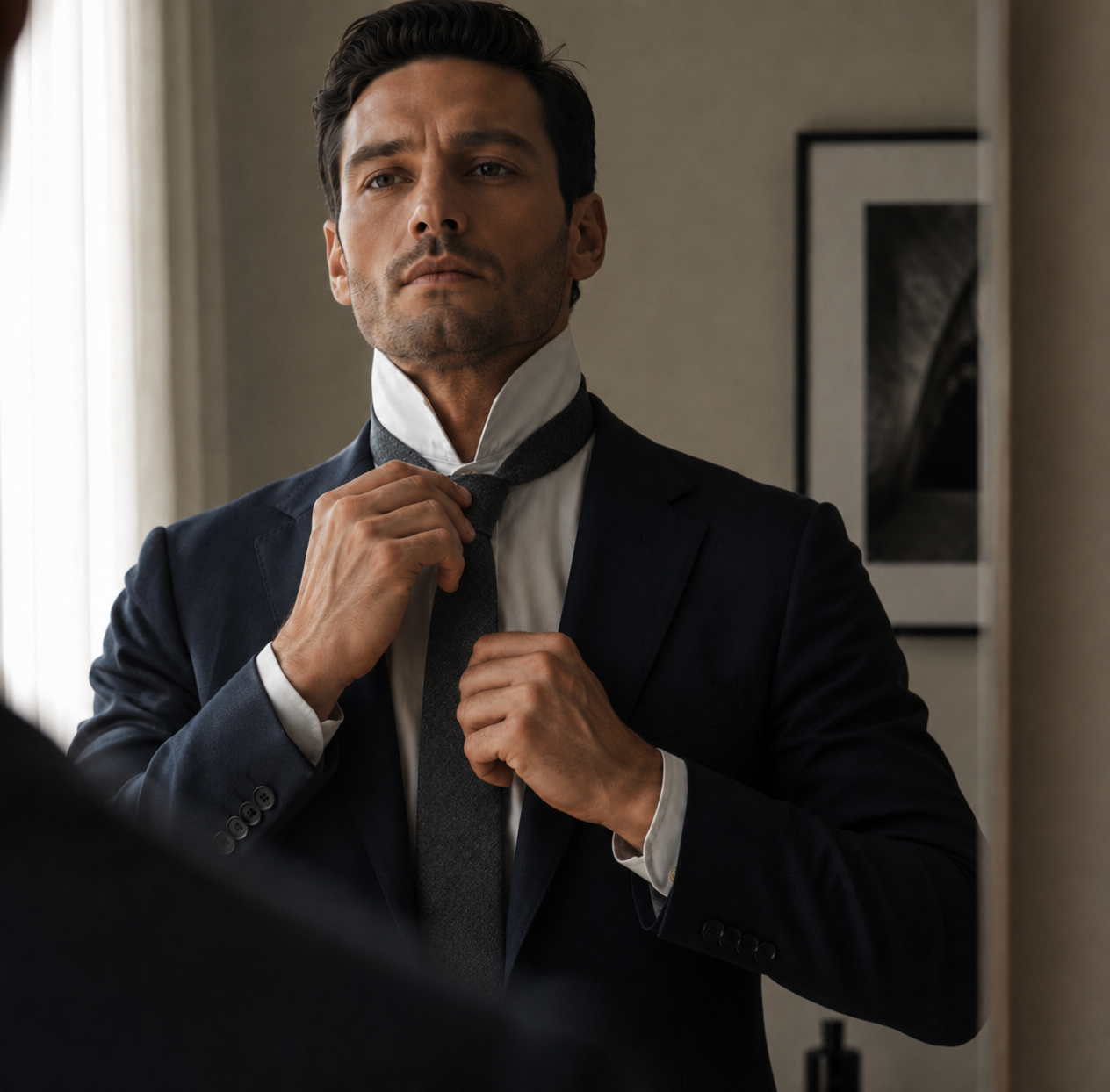
The tie occupies an interesting place in modern menswear.
It was once an expected part of professional dressing. Today, dress codes are more relaxed, suits are worn differently, and even traditionally formal environments have become less rigid.
So one question comes up often with clients:
“Do I actually need to wear a tie?”
The short answer is no.
The better answer is: it depends on where you're going, what you're wearing, and how you want to show up.
A tie shouldn't be something you automatically add because you're wearing a suit. It should have a reason for being there.
When a Tie Makes Sense
There are still situations where a tie can give an outfit exactly the level of polish it needs.
Consider wearing one for:
Formal weddings
Important professional meetings
Interviews in more traditional industries
Formal dinners
Certain networking and business events
Ceremonies and occasions with a defined dress code
In these environments, a tie can reinforce the structure of the rest of your outfit and signal that you understand the occasion.
But that doesn't mean the result has to feel overly corporate.
A textured sport coat with a knit tie feels considerably more relaxed than a traditional business suit with a silk tie. A subtly patterned tie can bring personality to otherwise restrained tailoring.
The tie itself isn't necessarily formal. How you style it determines how formal it feels.
When You Can Skip the Tie
There are plenty of situations where an open collar is not only acceptable—it may actually feel more appropriate.
Think:
Business-casual offices
Creative professional environments
Relaxed networking events
Casual weddings
Dinners and social occasions
Less formal client meetings
A well-fitting suit or sport coat with an open-collar shirt can still look polished and authoritative.
The important distinction is that removing the tie shouldn't mean removing the intention from the outfit.
Your shirt collar needs to sit properly. Your jacket needs to fit. Your shoes and accessories should still make sense with the rest of the look.
If you're removing formality from one area, the other details become even more important.
My guide to how men's clothes should fit covers the proportions that make these more relaxed combinations work.
Consider the Environment Before You Decide
Modern dress codes aren't always clearly defined.
“Business casual” can mean something completely different at a law firm than it does at a technology company. A networking dinner in Los Angeles may have a different expectation from the same event in another city or industry.
Before deciding on the tie, consider:
Who's going to be there?
What's the purpose of the occasion?
How formal is the environment?
How do you want to be perceived when you walk into the room?
Sometimes being slightly more polished works in your favor. Other times, wearing a tie when no one else is remotely that formal can create unnecessary distance.
Good style isn't about following a rule regardless of context. It's knowing how to read the situation.
If You're Wearing a Tie, Make It Intentional
Once you've decided the outfit calls for one, the tie should complement everything around it.
Silk is the traditional choice for formal and professional tailoring.
Knitted silk, wool, and textured ties can soften a suit or sport coat and work particularly well when you want something polished without feeling overly formal.
For most wardrobes, I prefer:
Solid colors
Subtle stripes
Small-scale patterns
Textured weaves
Colors that connect naturally with the shirt and jacket
Be more selective with oversized patterns, novelty ties, overly shiny fabrics, and anything that becomes the first thing someone notices.
A good tie should finish the outfit, not take it over.
Pay Attention to Proportion
The tie also needs to make sense with your body and tailoring.
Its width should feel balanced against your jacket lapels and your overall proportions. The knot should work with the shape and spread of your shirt collar. And when tied, the tip should generally reach around the waistband or belt buckle.
These details seem minor individually.
Together, they're what make tailoring look considered.
It's the same reason fit and proportion matter so much in a suit. When everything relates properly, you notice the man wearing the clothes rather than one detail fighting for attention.
What About a Shirt and Tie Without a Jacket?
For most of the looks I create, I prefer a tie as part of a complete tailored outfit rather than a standalone shirt-and-tie combination.
A jacket gives the tie context and creates a more finished silhouette.
If the occasion warrants a tie, start with the complete look. You can always remove your jacket as the environment becomes more relaxed.
It's easier to dial down a polished outfit than rescue one that feels unfinished.
The Bottom Line
Men don't need to wear ties as often as they once did.
That actually makes wearing one more intentional when you choose to.
A tie can add polish to an important meeting, bring personality to tailoring, or signal respect for an occasion. Going without one can make the same wardrobe feel modern, approachable, and relaxed.
Neither is automatically better.
The question isn't, “Are men supposed to wear ties anymore?”
It's:
“Does a tie make this particular outfit better for where I'm going?”
Know the setting. Consider the rest of the outfit. Then make the choice deliberately.

BRANDI HEARN
Strategic Wardrobe Advisor · Los Angeles
Brandi Hearn is a Strategic Wardrobe Advisor with more than a decade of experience helping accomplished men build intentional wardrobes around their careers, lifestyles, and how they want to show up.