
The Benefits of a Wardrobe Advisor: Why Every Man Needs One
Written by Brandi Hearn
Most men build their wardrobes over time.
A jacket gets added for work. A few shirts for meetings. Something for a wedding. New shoes when the old ones wear out. Casual pieces for weekends.
Eventually, there’s a closet full of clothing—but not necessarily a wardrobe that works particularly well together.
That’s an important distinction.
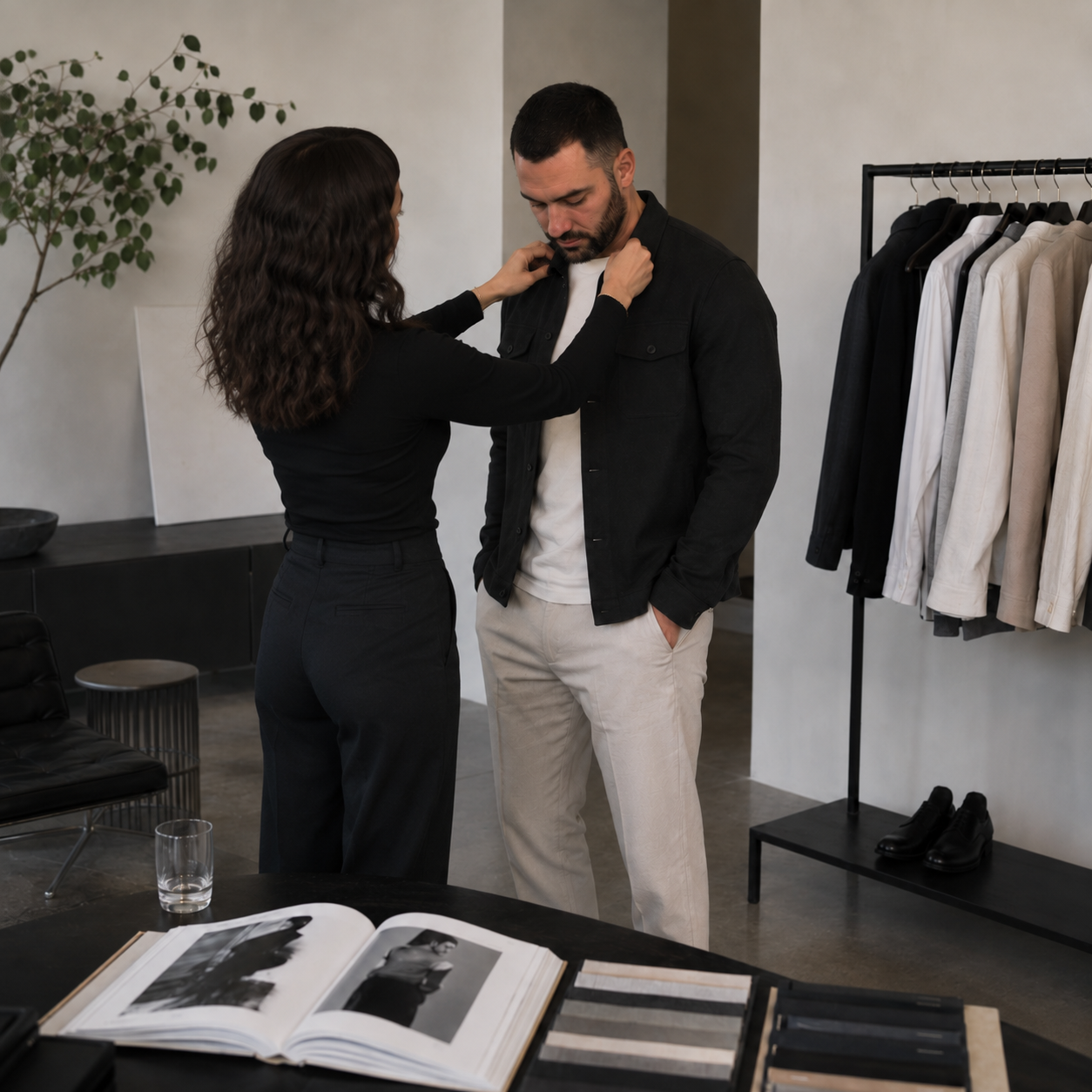
A wardrobe advisor looks beyond the individual pieces and considers how everything functions as a whole. What fits well. What you actually wear. What works together. What’s missing. And whether the wardrobe makes sense for the way you live today.
It’s less about telling you what to wear and more about bringing intention to the decisions behind your wardrobe.
Because when those decisions are made well, you don’t have to think nearly as much about getting dressed.
1. Your Wardrobe Should Reflect Your Life Now
It’s easy for your wardrobe to fall behind the rest of your life.
Your career changes. Your schedule changes. You travel more. You start going to different types of events. Maybe your personal life has changed and suddenly you need more options for dinners, dates, weekends, or social occasions.
Meanwhile, much of what’s hanging in your closet was bought for a different version of your life.
When I work with a client, I want to understand how he actually lives before we start talking about what he should buy.
That includes:
His profession and work environment
His lifestyle outside of work
The places and events he regularly dresses for
His personal preferences
His proportions and fit needs
What he feels good wearing
How he wants to present himself
Those things should determine the wardrobe—not whatever happens to be trending at the moment.
The goal isn’t to create a new identity through clothing. It’s to make sure your wardrobe accurately reflects the one you already have.
2. A Full Closet Doesn't Always Mean You Have Options
I see this often.
A man has plenty of clothes, but when it’s time to get dressed, he reaches for the same handful of pieces.
Usually, the problem isn’t the amount of clothing. It’s how the wardrobe was built.
You may have several good shirts, but only one pair of trousers you like wearing with them. A jacket may look great on its own but not work particularly well with the rest of your closet. Or you may have five versions of essentially the same thing while another part of the wardrobe is completely missing.
That’s why I look at what you own before deciding what you need.
What are you actually wearing? What’s worth keeping? What needs tailoring? What should eventually be replaced? Where are the real gaps?
Sometimes the best thing you can add to a wardrobe isn’t the most exciting piece. It’s the one that suddenly makes five things you already own more useful.
You don’t necessarily need more choices. You need better ones.
If this sounds familiar, I’ve written more about why a full closet can still leave you feeling like you have nothing to wear.
3. Fit and Proportion Matter More Than Most Men Realize
You can spend a lot of money on clothing and still not look particularly put together if the fit is off.
Two men can wear almost identical outfits and get very different results simply because the proportions are different.
I pay attention to details like:
Shoulder placement
Shirt and jacket length
Sleeve length
Trouser rise
Room through the seat and thigh
Taper
Where the trouser breaks
How the pieces balance one another
And the answer isn’t always to size down.
Sometimes a garment needs tailoring. Sometimes you need a different size or fit. And sometimes the cut simply isn’t right for your proportions.
Knowing the difference matters.
Otherwise, it’s very easy to keep buying different versions of the same fit problem and wondering why nothing ever looks quite right.
You can also start with my Men's Fit & Tailoring Guide for a closer look at how clothing should fit.
4. Shopping Becomes Much More Focused
Shopping isn’t difficult because there aren’t enough options.
There are too many.
Between different brands, fits, fabrics, colors, price points, and constant new arrivals, you can spend hours looking and still have no idea whether something actually belongs in your wardrobe.
Part of my role as a wardrobe advisor is being the filter.
Instead of looking at everything available, I’m narrowing the field based on things that actually matter:
Your proportions and measurements
Brands and cuts likely to work for you
Your lifestyle
Your personal preferences
Your existing wardrobe
Quality
Versatility
What you genuinely need
The question becomes less “Do I like this?” and more “Does this make sense for my wardrobe?”
Those are two very different things.
You can like a jacket and still not need it. You can find a great pair of shoes that doesn’t work with enough of your clothing. You can buy something because it looks good online only to realize you have nowhere to wear it.
A wardrobe advisor helps take some of that trial and error out of the process.
5. You Get More Out of What You Already Own
Building a better wardrobe doesn’t always mean replacing everything.
In fact, it usually shouldn’t.
There are often pieces already in a client’s closet that are perfectly good but aren’t being used particularly well.
Maybe a jacket only gets worn one way. A pair of trousers has been mentally designated as “work pants” even though it could easily be dressed down. Or a shirt that rarely gets worn suddenly works once we introduce the right trouser and shoe.
That’s why I don’t look at new pieces in isolation.
If I’m recommending a trouser, I’m thinking about which shirts, jackets, knitwear, and shoes it can work with. If I’m adding a jacket, I want to know how many existing combinations it improves.
A strong wardrobe is less about the number of pieces you own and more about the number of ways those pieces can work together.
6. Your Wardrobe Can Work Across More Than One Part of Your Life
Most men aren’t dressing for one environment.
You might have a client meeting in the afternoon and dinner that evening. You travel for work but add a personal weekend to the trip. You need to look polished in certain settings but don’t want to feel overly dressed in others.
You shouldn’t necessarily need a completely separate wardrobe for each.
Part of building a versatile wardrobe is finding the right amount of overlap.
A jacket might work with trousers for a meeting and denim for dinner. A knit polo could sit under tailoring but also work on its own with chinos. The right pair of sneakers might work for travel, weekends, and a casual office.
Not every piece needs to do everything.
But enough of your wardrobe should work across different situations that you’re not constantly starting over.
7. Travel Gets Easier
Travel has a way of revealing whether a wardrobe actually works.
If packing means bringing several pairs of shoes, multiple jackets, and individual outfits that can only be worn one way, you end up taking far more than you need.
A more considered wardrobe gives you pieces that can be recombined.
The trousers you wear to a meeting can work differently at dinner. The jacket you travel in can be worn again later in the trip. Several shirts can work with the same trousers and shoes.
That makes it easier to pack for:
Business travel
Conferences
Client dinners
Weekend trips
Vacations
Events
The goal isn’t to pack as little as possible. It’s to have the right options without bringing your entire closet with you.
8. You Make Better Decisions About Where to Spend
Not everything in your wardrobe needs to be expensive.
Knowing where to invest is more important.
There are certain categories where quality, construction, material, and longevity may justify spending more. A jacket you wear regularly. Good leather shoes. Outerwear. A pair of trousers that fits exceptionally well and works across several parts of your life.
There are other areas where spending significantly more may not give you much additional value.
I’m also looking at the purchase within the context of the entire wardrobe.
Does it fill a real gap?
Will you wear it regularly?
Can you wear it multiple ways?
Do you already own something that serves essentially the same purpose?
A good purchase isn’t simply something you like. It’s something that earns its place in your wardrobe.
9. You Get an Outside Perspective
We all get used to seeing ourselves a certain way.
Maybe you’ve bought the same style of shirt for fifteen years. You automatically reach for the same colors. You’ve always worn a certain trouser fit, so anything different initially feels wrong.
That doesn’t necessarily mean those choices are bad.
But sometimes an outside perspective can see something you can’t.
My role as a Strategic Wardrobe Advisor for Men isn’t to push a client into a completely different style. It’s to understand what already feels natural to him and recognize where a change in fit, proportion, color, or combination could make it better.
Sometimes that means introducing something new.
Other times, it means confirming that what you’re already doing works and simply refining it.
The wardrobe should still feel like yours when we’re finished.
10. Getting Dressed Requires Less Thought
This is ultimately what a well-built wardrobe should do.
Make things easier.
You know what fits. You know which pieces work together. You have the right clothes for the situations that regularly come up in your life. You’re not buying something new every time you receive an invitation or have an important meeting.
And you’re not standing in front of a full closet wondering why nothing feels right.
The decisions have already been made.
That doesn’t mean you stop caring about what you wear. It means your wardrobe has enough structure that you don’t have to continually solve it.
The Final Take
Working with a wardrobe advisor isn’t about having someone dictate what you should wear.
It’s about taking a more considered approach to something you use every single day.
What belongs in your wardrobe? What fits properly? What works together? What are you missing? Where should you invest? And what actually makes sense for your life?
Once those questions have been answered, clothing becomes much easier.
You have fewer pieces that sit unworn. More combinations from what you own. Better options for the different parts of your life. And a clearer sense of what belongs in your wardrobe going forward.
The result isn’t a wardrobe that looks like someone else chose it for you.
It’s a wardrobe that feels distinctly yours—and works the way it should.
Build a Wardrobe Around the Way You Actually Live
If your wardrobe no longer reflects your career, lifestyle, or how you want to show up, book a Private Consultation.
Through the Private Wardrobe Advisory, we’ll look at the complete picture—what you already own, what needs refinement, what’s missing, and how everything should work together to build a wardrobe that feels distinctly yours.

BRANDI HEARN
Strategic Wardrobe Advisor · Los Angeles
Brandi Hearn is a Strategic Wardrobe Advisor with more than a decade of experience helping accomplished men build intentional wardrobes around their careers, lifestyles, and how they want to show up.