
How a Suit Should Fit from Head to Toe — Men’s Style Guide
Written by Brandi Hearn
A great suit doesn’t start with the brand, fabric, or price.
It starts with fit.
You can spend thousands on a suit, but if the shoulders are too wide, the trousers are too long, or the jacket is pulling across your chest, it won’t look as polished as it should.
On the other hand, a relatively simple suit that fits your proportions properly can look exceptional.
That’s because a suit is really about balance. The jacket, shirt, trousers, tie, shoes, and finishing details all need to work together to create one clean silhouette.
Here’s what I look for when assessing how a man’s suit should fit.
1. The Suit Jacket: Start With the Shoulders
The shoulders are the first place I look because they establish the structure of the entire jacket—and they’re also one of the most difficult areas to alter.
Shoulders: The jacket should sit cleanly across your shoulders, with the seam ending around your natural shoulder. You shouldn’t see obvious divots, pulling, or excess fabric extending beyond your frame.
Chest: Button the jacket and look at the front. It should lie smoothly without pulling into an “X” around the button.
Waist: A little shape through the waist creates definition, but the jacket shouldn’t feel cinched or restrictive.
Length: In most cases, the jacket should cover your seat and create balanced proportions between your upper and lower body.
Sleeves: Aim for roughly a quarter to half an inch of shirt cuff showing beneath the jacket sleeve.
These details may seem small individually, but together they determine whether the jacket looks like it belongs on your body.
If you want to understand fit beyond suiting, my complete guide to how men’s clothes should fit breaks down shirts, jackets, trousers, denim, and other wardrobe essentials.
2. The Dress Shirt: Clean Lines Underneath
A beautifully fitted jacket can still look off if there's too much fabric underneath it.
Your dress shirt should follow your body without clinging to it.
The collar should sit comfortably around your neck. The shoulder seams should align with your shoulders. The buttons should lie flat across your chest, and there shouldn't be excessive fabric gathering around your waist.
Pay particular attention to your sleeves.
Your shirt cuffs should reach your wrist so they remain slightly visible underneath your jacket sleeves.
The shirt and jacket should look like they were considered together—not like two separate pieces competing for space.
3. The Tie: Keep the Proportions Balanced
Your tie should complement the suit rather than becoming the first thing someone notices.
As a general guideline, the tip should reach around the top of your belt buckle or waistband.
Width matters too.
A very narrow tie can look disproportionate on a broader man, while an excessively wide tie can overwhelm a smaller frame. I also consider the width of the jacket lapels so the entire upper half of the outfit feels balanced.
The same applies to your knot.
You don't need something elaborate. A clean, proportional knot that works with your collar and face shape is usually much more effective.
Nothing should feel exaggerated.
4. The Suit Trousers: Pay Attention to the Entire Line
Men often focus heavily on the jacket and treat the trousers as an afterthought.
They shouldn't.
Your trousers have a major impact on the proportions of the entire suit.
Waist: They should stay comfortably in place without needing a belt to hold them up.
Seat: The fabric should lie smoothly without sagging or pulling.
Thigh: You need enough room to move without excess fabric creating unnecessary volume.
Taper: The leg should create a clean line toward your shoes without becoming excessively narrow.
Length: A slight break or little to no break can both work depending on your proportions and preferences. What I generally want to avoid is fabric heavily stacking around the ankle.
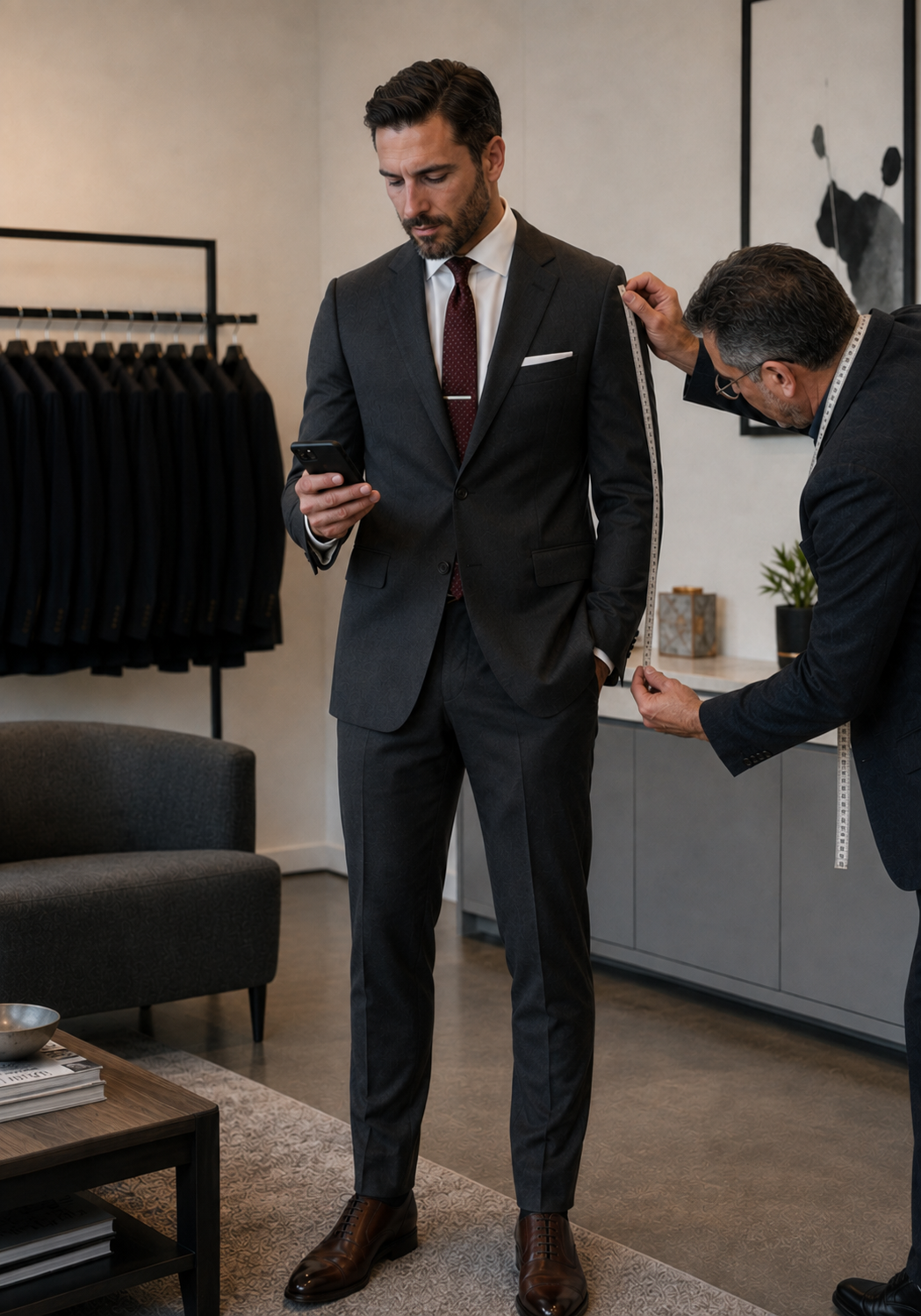
This is one area where tailoring can completely change the way your clothing looks. Small adjustments to trouser length, waist, taper, or jacket sleeves can make a significant difference.
5. Shoes and Accessories: Finish the Suit, Don’t Compete With It
Once the fit is right, the finishing details should support everything else.
Black shoes are a natural choice with black and charcoal suits and more traditional professional dressing. Brown shoes can work particularly well with navy and many shades of grey, depending on the formality of the setting.
Your belt should coordinate with your shoes, and accessories should remain considered rather than excessive.
A quality watch. A simple pocket square when appropriate. A well-chosen tie.
That's usually enough.
The goal isn't to add as many finishing touches as possible.
It's to know when the outfit is finished.
The Suit Should Work With Your Proportions
This is the part generic suit-fit rules sometimes miss.
Two men can wear the same suit size and need completely different adjustments.
Height, shoulder width, torso length, leg length, chest, waist, thighs, and overall build all affect how a suit should sit.
A shorter jacket isn't automatically more modern. Slimmer trousers aren't automatically more flattering. And sizing down isn't necessarily the solution to excess fabric.
The goal is proportion, not simply making everything tighter.
That's also why I don't recommend becoming overly attached to the size printed on the label. The number matters far less than what the garment is doing on your body.
When Tailoring Is Worth It
Very few off-the-rack suits fit perfectly without some adjustment.
A tailor can often refine:
Jacket sleeve length
Trouser length
Trouser waist
Trouser taper
Jacket waist suppression
Certain sleeve and body adjustments
But tailoring has limits.
Major shoulder problems, an incorrect jacket length, or a fundamentally wrong cut can be difficult—or simply not worthwhile—to correct.
Buy for the areas that are hardest to alter first. Refine the rest afterward.
Final Thought
The best-fitting suit isn't necessarily the tightest, trendiest, or most expensive one in the room.
It's the one that looks balanced on the man wearing it.
The shoulders sit correctly. The jacket follows the body without pulling. The trousers fall cleanly. The shirt and tie are proportional. The shoes and accessories finish the outfit without distracting from it.
When those elements work together, you stop noticing the individual pieces.
You notice the man wearing them.
That's ultimately what good tailoring should accomplish.
And it's the same principle behind building a wardrobe as a complete system: every element should work together rather than compete for attention.
Get the Fit Right Across Your Entire Wardrobe
If you're unsure whether your suits—or the rest of your wardrobe—are working with your proportions, book a Private Consultation.
We'll look at fit, proportion, what you already own, and where adjustments or better pieces could make the biggest difference.

BRANDI HEARN
Strategic Wardrobe Advisor · Los Angeles
Brandi Hearn is a Strategic Wardrobe Advisor with more than a decade of experience helping accomplished men build intentional wardrobes around their careers, lifestyles, and how they want to show up.