
Written by Brandi Hearn
What you wear to the gym matters more than you might think.
Not because your workout needs to become a fashion moment, but because the right clothing affects how you move, how comfortable you feel, and how you carry yourself.
The same standards that apply to the rest of your wardrobe still matter here: proper fit, good proportions, quality, and clothing that makes sense for what you're doing.
You don't need an elaborate gym wardrobe. You need functional pieces that perform well and look considered—whether you're heading in for a 6AM lift, squeezing in a workout between meetings, or going straight from the gym to the rest of your day.
Here's what I recommend.
1. Choose Fabrics That Perform
Your workout clothes should work with your body, not against it.
Look for lightweight technical fabrics and performance blends designed to breathe, manage moisture, stretch, and recover their shape.
For most workouts, that means:
Moisture-wicking performance tees
Lightweight technical knits
Stretch training shorts
Breathable joggers
Performance layers that don't become heavy when you sweat
Traditional cotton can be comfortable, but it absorbs moisture and can become heavy during more intense workouts.
And retire the old college T-shirts and worn-out mesh shorts. Gym clothes are still part of your wardrobe. They should fit properly, be in good condition, and serve a purpose.
2. Get the Fit Right
Gym clothing doesn't need to be skin-tight, but oversized gear isn't the answer either.
I prefer an athletic, streamlined fit that gives you enough room to move without excess fabric getting in the way.
For tops, look for a fit that sits properly through the shoulders and chest and follows the torso without clinging.
For bottoms, consider:
Tapered performance joggers
Training shorts that finish around or slightly above the knee
Stretch fabrics that accommodate movement
A waistband that stays securely in place without digging in
Pay attention to proportion, too. An excessively long T-shirt paired with oversized shorts can overwhelm your frame just as easily at the gym as it can anywhere else.
Performance and fit should work together.
3. Build Around Neutral Colors
You don't need complicated patterns or a different color for every workout.
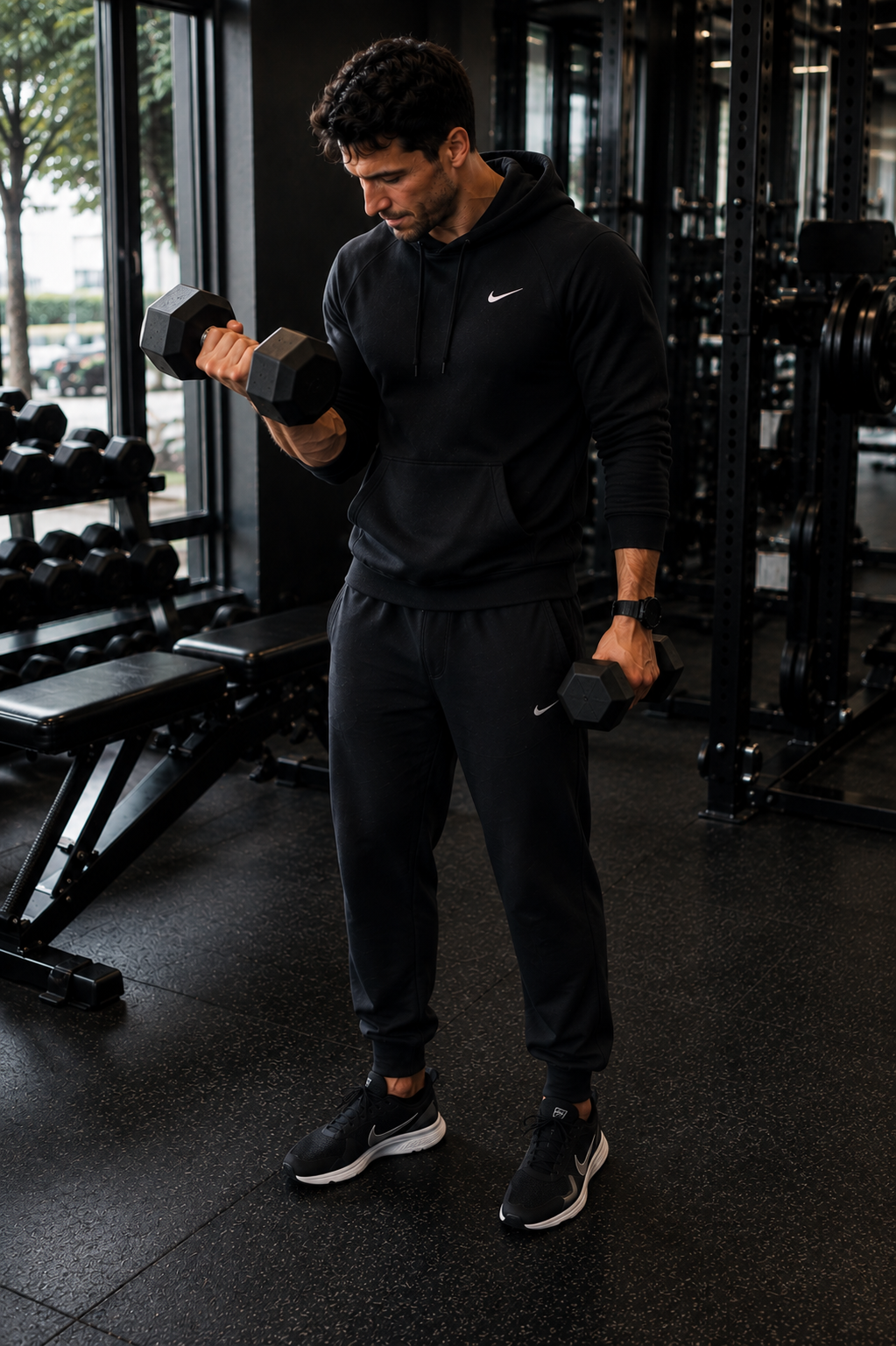
A foundation of black, navy, charcoal, grey, and other dark neutrals makes getting dressed easier and gives your gym wardrobe the same cohesion you'd want from the rest of your closet.
They also coordinate easily, which means you can own fewer pieces while still having plenty of combinations.
A simple rotation might include:
Black and charcoal training shorts
Navy or black joggers
Black, grey, and navy performance tees
One neutral hoodie or zip-up
Clean, understated training shoes
From there, you can introduce color or subtle pattern if it fits your personal style.
The goal isn't to make your gym wardrobe boring. It's to create a strong foundation first.
4. Choose the Right Clothes for Your Workout
Not every piece of activewear is appropriate for every type of training.
If you're lifting, you may want a more fitted top that allows you to see your positioning and doesn't interfere with equipment.
If you're running or doing high-intensity training, lightweight moisture-wicking fabrics and supportive footwear become more important.
For yoga, mobility work, or lower-intensity training, you may want softer fabrics with greater stretch.
Dress for what you're actually doing.
That's a principle I use throughout a client's wardrobe. Clothing should support the environment and activity rather than forcing one outfit formula into every situation.
5. Don't Ignore Your Shoes
Your sneakers should be chosen for performance first.
Running shoes are designed differently from lifting or cross-training shoes, so make sure you're wearing footwear appropriate for your workout.
But functional doesn't have to mean visually chaotic.
Unless you genuinely prefer bold athletic shoes, streamlined styles in black, white, grey, or another neutral are easier to coordinate with the rest of your training wardrobe.
And keep them in good condition.
Gym shoes will naturally show wear, but there's a difference between shoes that have been used and shoes that look like they should have been replaced six months ago.
6. Have a Good Layer for Before and After
Don't forget about what you're wearing to and from the gym.
A fitted hoodie, clean quarter-zip, performance jacket, or lightweight sweatshirt makes a big difference—especially if you're grabbing coffee afterward, running an errand, or moving between the gym and the rest of your day.
This is where a cohesive workout wardrobe becomes particularly useful.
Instead of looking like you threw on whatever was available, you still look pulled together without sacrificing comfort.
7. Replace Workout Clothes Before They're Completely Worn Out
Activewear takes more abuse than almost anything else in your wardrobe.
Frequent washing, sweat, friction, and stretching eventually affect the fabric.
Watch for:
Permanent odors
Stretched necklines
Pilling
Faded fabric
Waistbands that no longer hold
Shirts that have lost their shape
Shoes with excessive wear
If you wouldn't feel good walking into the gym wearing it, it probably shouldn't still be in your rotation.
It's easy to keep clothing simply because it's still wearable, but there's a difference between something that technically still works and something that's still serving you well. I go deeper into that distinction in Why Settling for ‘Good Enough’ Keeps Men from Looking Sharp.
The Final Take
Looking good at the gym isn't about dressing for other people.
It's about maintaining the same level of intention you bring to the rest of your life.
Choose clothes that fit properly, perform well, coordinate easily, and make sense for the way you train. Keep them in good condition and replace them when they've reached the end of their useful life.
You don't need to look like a sponsored athlete.
You should look like yourself—just dressed appropriately for the gym.
Build a Wardrobe for Your Entire Lifestyle
A well-built wardrobe shouldn't stop at the office.
If you want your clothing to work across work, travel, social settings, weekends, and everything in between, book a Private Consultation.
Through the Private Wardrobe Advisory, we'll build around how you actually live—so you have the right pieces for the moments that make up your day.

BRANDI HEARN
Strategic Wardrobe Advisor · Los Angeles
Brandi Hearn is a Strategic Wardrobe Advisor with more than a decade of experience helping accomplished men build intentional wardrobes around their careers, lifestyles, and how they want to show up.